Super User
CITU CONDEMNS THE GRUESOME KILLINGS OF INDIAN SEAFARERS BY THE US NAVY, IN THE GULF REGION
The Centre of Indian Trade Unions (CITU) expresses its profound grief and deep concern over the tragic killings of three Indian seafarers following the barbaric attack by the US Navy on the oil tanker MT Settebello near the Strait of Hormuz, off the coast of Oman. CITU extends its heartfelt condolences to the bereaved families and stands in solidarity with seafarers and maritime workers across the globe.
The deceased seafarers have been identified as Aditya Sharma (Deck Cadet), Shivanand Chaurasia (Engine Fitter), and Patanala Suresh (Chief Engineer). These workers lost their lives while performing their professional duties at sea. Their untimely deaths are a tragic loss to their families and to the entire maritime community.
Reports from Forward Seamen’s Union of India (FSUI) an affiliate of Centre of Indian Trade Union, indicates that MT Settebello, carrying 28 crew members, including 24 Indians, was attacked by United States military forces allegedly in connection with the enforcement of sanctions related to Iranian crude oil transportation. The attack reportedly caused severe damage to the vessel, resulting in the deaths of the three Indian seafarers. Twenty-one Indian crew members were rescued.
CITU is also deeply concerned by reports of senior attacks on other merchant vessels operating in the region, including MT Marivex and MT Jalveer, carrying Indian seafarers. These incidents demonstrate the growing dangers faced by civilian maritime workers mostly Indians, in conflict-affected waters and highlight the deteriorating security situation in one of the world's most important maritime trade routes.
Seafarers are workers, not combatants. They are not parties to military conflicts or geopolitical disputes. Their labour sustains international trade, energy transportation and global supply chains. The lives of civilian maritime workers must never be endangered by military actions as per the International Conventions.
CITU strongly condemns all actions that threaten the lives and safety of seafarers and calls for a full, transparent and independent international enquiry into the attacks on MT Settebello, MT Marivex and MT Jalveer. Accountability must be ensured and effective measures taken to prevent such tragedies in the future.
India is among the world's largest suppliers of maritime manpower, with over three lakh Indian seafarers serving on vessels across the globe. Their safety and welfare must be treated as a matter of national priority.
CITU demands a full and independent international investigation into these attacks, Immediate measures to ensure the safety of Indian seafarers operating in conflict zones, Strengthened naval protection and emergency-response mechanisms for merchant vessels, A permanent crisis-management mechanism involving all relevant government agencies, shipowners and seafarers' unions, Adequate ex-gratia compensation, insurance benefits and statutory entitlements for the families of the deceased, Long-term rehabilitation, including employment assistance and educational support for dependents, Mandatory war-risk allowance and enhanced insurance coverage for seafarers deployed in high-risk regions, Establishment of safe maritime corridors and review of voyages through conflict-affected waters, Strong diplomatic initiatives at international forums to protect merchant shipping and civilian seafarers.
CITU stands firmly with the bereaved families and with maritime workers worldwide in demanding justice, accountability and protection for all seafarers.
Issued by
Elamaram Kareem
General Secretary
CITU EXPREESES SERIOUS CONCERN OVER THE GRIEVOUS FATAL ACCIDENT IN VIZAG SREEL KILLING EIGHT WORKERS AND SEVERELY INJURING MANY ON THE SHOP FLOOR ON 8TH JUNE 2026
CITU DEMANDS SERIOUS PROBE ON THE ACCIDENT INCLUDING ON PREVENTIVE SAFETY AND OBSERVANCE OF STANDARD OPERATING PROCEDURE BY AN IMPARTIAL AGENCY AND FIX THE ACCOUNTABILITY
CITU DEMANDS LEGITIMATE COMPENSATION TO AFFECTED WORKERS AND THEIR FAMILY AND PERMANENT EMPLOYMENT FROM VICTIM’S FAMILY
The Centre of Indian Trade Unions is extremely shocked and grieved over the horrible fatal accident that took place in Visakhapatnam Steel Plant on 8th June 2026 while moving hot molten liquid steel from furnace (SMS) to continuous casting system. 8 employees on duty comprising 3 regular workers, 4 contract workers and one officer were killed on the spot and six more were severely injured besides a few others. Death toll may further increase.
A hurriedly issued Official Press Information Bureau Release after about three hours termed the accident as “Fire Accident”, which is not wholly factual and smacks of evasion of responsibility and accountability. Such horrible accident took place basically owing to gross violation of and compromise in the “STANDARD OPERATING PROCEDURE(SOP)” which is integrally linked with the basic preventive safety norms in such a extremely hazard-prone steel production process. While moving hot liquid molten steel from SMS-1 in the ladle through Crane to its destination of continuous caster, said molten steel has to be mixed with elements like ferro-alloy, manganese, silicon etc and compulsorily allow the MIX to be homogenized and degasified through Ladle Furnace (LF) and RH before the same is put in continuous caster. Any fault, evasion of this homogenization and degasification of the hot steel mix provokes the possibility of explosion of hot metal-mix on the Ladle and accident takes place through huge spillage of the hot metal from the Ladle causing such horribly tragic fatal accident as has happened in Vizag Steel Plant. And possibility of such default and violation of SOP cannot be wished away as the Vizag Steel Plant with such a huge capacity is operating with only one Ladel Furnace (LF), where as all other integrated steel plants under SAIL are having not less than three LF. Despite repeated and consistent persuasion by all the unions in the Plant to increase the number of Ladel Furnace, the management has been arrogantly ignoring such crucial necessity and made themselves busy in cutting down manpower and pushing for outsourcing to private. It is also reported that the quality of the ferro-alloy mixed with hot metal was below the standard quality and the standard time to be made available for Ladle Furnace process or Argon Rinsing Station (ARS) has been skipped on that fateful day of accident.
Situation has become much more critical in the production operation owing to thoughtless drive of cutting down operational manpower by the management, may be under the direction of concerned Ministry. In the face of depletion of regular trained workforce due to superannuation, any fresh recruitment has been not only stopped, the management has been pursuing virtually forced VRS further creating shortage. Not only that, more than 5000 skilled contract workers have been illegally terminated and a crisis of trained and skilled manpower availability has become a big hazard in ensuring safe and productive operation.
It is thus clear that the grievous accident killing eight employees and seriously injuring many could have been avoidable, had the standard operating procedure and ensuring proper quality of the mixing material and also operational discipline been religiously followed. Professional failure of the managerial authority in ensuing proper equipments, proper quality of basic raw materials and stringent pursuit of the standard operating procedure has caused such a grim tragedy and so many loss of lives. CITU demands a thorough probe on the accident by an impartial agency taking all above aspects with required focus to find the truth and stringently fixing accountability.
CITU also demands legitimate compensation for all the workers and their families affected by this tragic accident and also permanent employment to the family members of those died due to the accident at the earliest.
Issued by
Elamaram Kareem
General Secretary
The Centre of Indian Trade Unions (CITU) expresses its deepest outrage and vehemently condemns the barbaric midnight crackdown carried out on the intervening nights during last couple of days, the latest being in mid-night of 7–8 June 2026 against railway hawkers, small shop owners, local residents, CITU activists, students and democratic activists in and around the Jadavpur Railway Station area.
Under the cover of darkness, a massive contingent of Police personnel, Railway Protection Force personnel and other security agencies, acting under the instructions of the BJP government at the State and the Centre, launched a coercive operation utilizing bulldozers and earthmoving machinery to demolish makeshift business establishments and destroy the means of livelihood of hundreds of poor vendors and their families. When local residents, trade union activists, students of Jadavpur University and democratic organizations peacefully assembled in solidarity and protested against this operation and asked for appropriate rehabilitation arrangement and alsoa reasonable time to move the usable and essentials, they were met with force, intimidation and violent repression.
CITU strongly condemns the physical assault resulting in injuries to a number of protesters and the arbitrary arrest of Srijan Bhattacharya, All India General Secretary of SFI, and several otherdemocratic activists. In an alarming attempt to suppress democratic dissent, the authorities also targeted veteran Left leader and CPI(M) Central Committee Member, former MP Dr. Sujan Chakraborty, theatre activist Joyraj Bhattacharya, trade union activists, students and local residents. Many sustained injuries during the indiscriminate lathi-charge and police action.Several of them got serious injuries.
CITU notes with grave concern that this is not an isolated incident but part of a broader pattern of forcible evictions and demolitions witnessed in Dum Dum, Salt Lake, Asansol, Barnpur, Siliguri and several other parts of West Bengal. Also in almost all the places CITU and other mass organizations immediately responded through organizing demonstrations and resistance along with the hawkers and vendors braving police attacks and repressions. Senior CITU leaders Gargi Chattopadhyay and others, leading activists of students and other mass fronts also faced brutal attacks and manhandling by police and RPF. This is not limited to Railway lands, but street vendors are also facing similar attacks. These operations are clearly designed to destroy petty trade, vending and small-scale economic activity and hand over land and other rights to big corporate interests. This is a direct class war that the double-engine BJP governments have unleashed upon the people of India. CITU has been leading the resistance movement against these illegal and inhuman evictions.
CITU emphasizes that irrespective of questions concerning ownership of, or jurisdiction over, the land concerned, every public authority is bound by the Constitution of India and the rule of law. State action cannot be arbitrary, disproportionate or punitive. Articles 14, 19 and 21 of the Constitution require that any action affecting the livelihood, dignity and fundamental rights of citizens must satisfy the principles of fairness, reasonableness and due process. In the landmark judgment of Olga Tellis v. Bombay Municipal Corporation (1985), the Court held that deprivation of livelihood directly affects the right to life and that any action resulting in such deprivation must conform to constitutional requirements and procedural fairness.
Over and above this, the assault on peaceful protesters raises grave concerns regarding the violation of constitutionally guaranteed democratic rights, including the freedoms of speech, expression, peaceful assembly and association guaranteed under Articles 19(1)(a), 19(1)(b) and 19(1)(c) of the Constitution of India.
The destruction of small businesses and the assault on democratic protesters reveal a disturbing disregard for the rights and dignity of working people. CITU warns that this aggressive attack on the poor and on democratic rights will be met with united, determined and statewide resistance by the working class and all democratic sections of society.
Therefore, CITU places the following demands before the authorities:
- Immediate and unconditional stoppage of all forced evictions, demolition drives, bulldozer operations and destruction of livelihoods in Jadavpur andother places throughout West Bengal.
- Adequate rehabilitation measures, alternative livelihood arrangements and compensation for all affected hawkers, vendors and small traders whose establishments were demolished or damaged.
- Immediate and unconditional release of Srijan Bhattacharya and all other activists arrested during the protest, and withdrawal of all false, fabricated and politically motivated cases lodged against protesters, trade union activists, students, local residents and democratic activists.
- Fixing accountability on officials responsible for any unlawful use of force, arbitrary action, violation of constitutional rights or abuse of authority during the operation.
CITU calls upon the entire working class, democratic institutions, student, youth and women's organizations, railway employees' unions, contractual workers' unions, hawkers' unions and commuters' associations across the country to demonstrate in front of Railway offices on 15 June 2026 and demand an end to evictions without rehabilitation in West Bengal and other parts of the country.
The CITU State Committees will coordinate with other mass organisations. All other mass organisations and democratic movements are requested to cooperate and build a united struggle against these brutal attacks.The struggle to defend the livelihood, dignity and constitutional rights of working people will continue with renewed determination.
Issued by
(Elamaram Kareem)
General Secretary
Historic Triumph in Haryana: CITU Salutes the Resolute Struggle and Militant Unity of Striking Workers
The Centre of Indian Trade Unions (CITU) extends its warmest revolutionary greetings and heartiest congratulations to the Haryana Municipal Employees and the Fire Department workers led by the Sarva Karmachary Sangh (SKS) for their historic and resounding victory. This resounding triumph is a direct result of the militant leadership and strategic resolve of the SKS; whose pivotal role in organizing and sustaining this struggle has forced a reluctant administration to its knees. By paralyzing the state administration from 1 May 2026 and mobilizing the massive All India State Government Employees Federation’s strong solidarity wave on 14 May, our Haryana state leadership has proven that organized class defiance is the only language the ruling class understands.
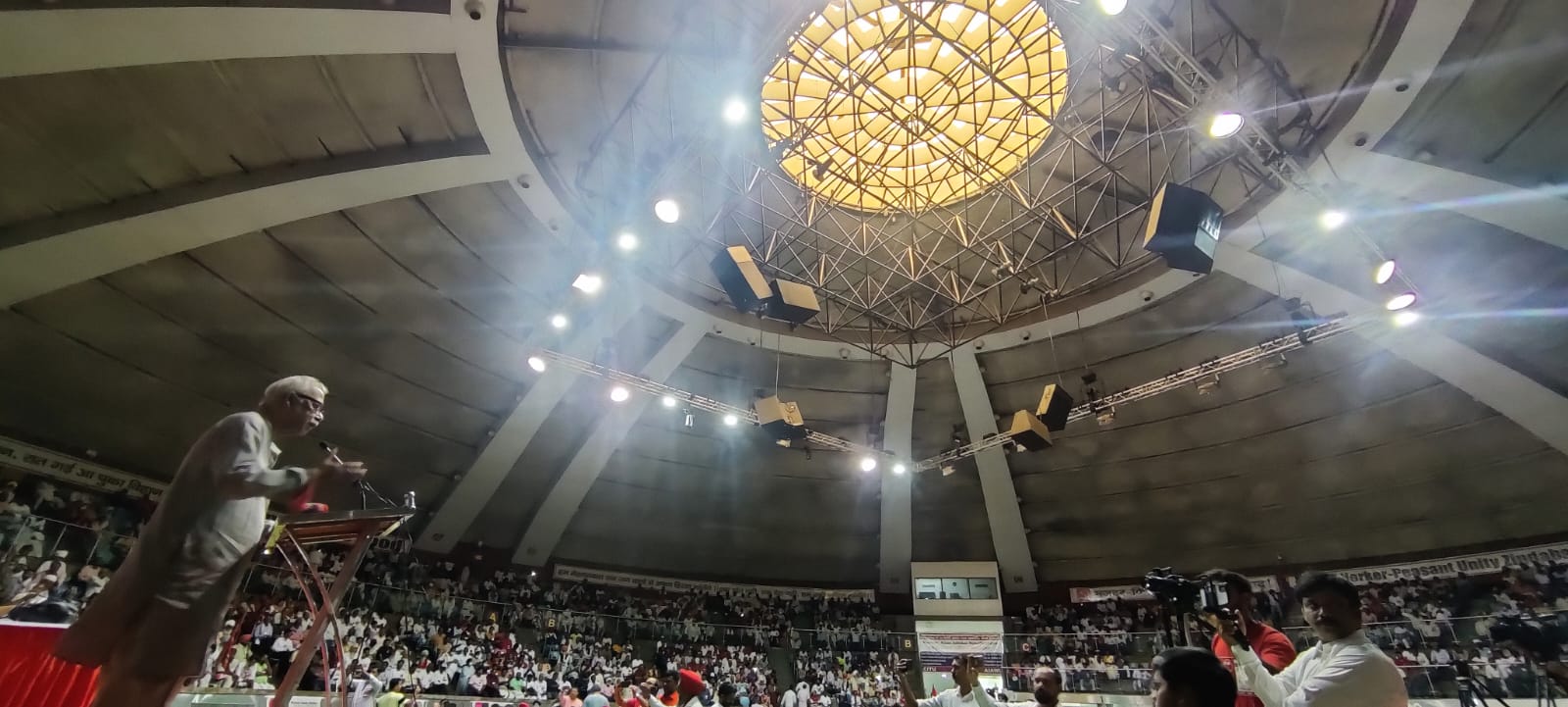
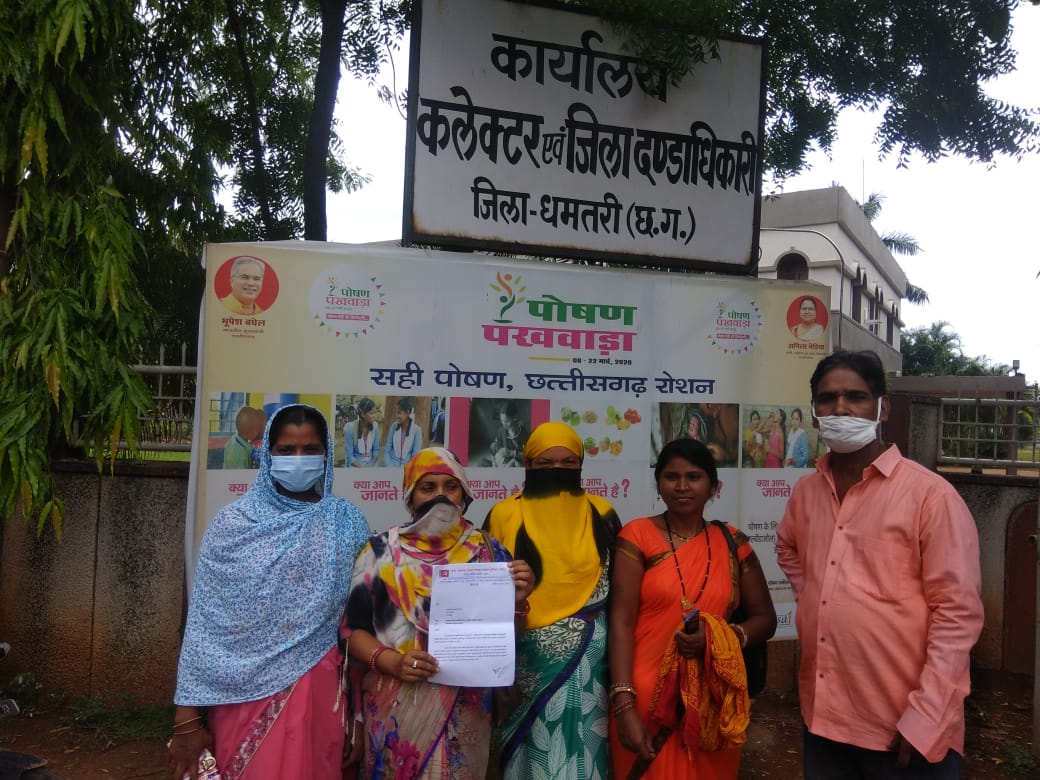
CITU proudly stands with the families of our fallen heroes, as this struggle has successfully corrected a grave injustice. We salute the memory of firefighters Bhavichand Sharma and Ranbir Singh, whose families will finally receive RS.50 lakh compensation and government jobs, ending the government's discriminatory delay. The agreement to regularize 13,000 municipal employees and fire staff up to the age of 55 is a landmark win against the exploitation of contractualization. In addition to that, the reinstatement of nearly 5,000 dismissed workers, the withdrawal of all harassment related actions, and the implementation of a RS. 5,000 risk allowances for sewer workers and firemen represent a comprehensive defeat of anti-worker policies.
Through this struggle, the unions have secured significant financial gains for the workers, including a RS. 25,500 pay scale for fire payroll employees and a minimum salary of RS. 15,220 for door-to-door sanitation workers with full EPF and ESI benefits. The doubling of medical leave and the creation of thousands of new regular posts ensure a more secure future for those who keep our cities running. While we celebrate this massive win, we have to remain vigilant to ensure the Cabinet meeting before June 30, 2026 honours these commitments without delay. This victory in Haryana serves as a beacon of hope for the entire Indian working class, proving that when we fight together, the government has no choice but to listen.
Issued by
Elamaram Kareem
(General Secretary)
Joint statement issued by the Platform of Central Trade Unions -CTUs and the Samyukt Kisan Morcha- SKM on 28th April 2026
Strongly Condemn the Repression Let Loose on AgitatingWorkers Fighting for Raise in Wages Pending for Years,Eight-hour Workday, Legal Entitlements of OvertimeAllowance, Weekly Off and Other Workplace Issues
Demand Unconditional Release of Arrested Workers, WithdrawCases, No illegal House Arrests, Basic Amenities and LPG forWorkers, Especially Migrant Workers
Call Indian Labour Conference (ILC) in Urgency Pending Since2015
Demand MSP for Farmers’ Produce with Guaranteed ProcurementCompensation for Crop Loss- No to Trade Deal with the US;Detrimental to the National Interests
Joint CTUs-SKM meeting at New Delhi on 13th May to consider a plan of action
SKM Appeals Farmers to Join May Day Processions
The joint meeting of CTUs and SKM held on 24th April took note that minimum wages havenot been revised in many states for the last 10 years despite the price rise in basicessentials. In most industrial hubs, contract, casual, or fixed-term workers are migrantworkers living in precarious conditions devoid of basic amenities. They are not allowed toform unions and are victimised if they attempt unionisation. The meeting also noted that theseries of spontaneous worker agitations were not isolated incidents.
Just two months ago, thousands of contract workers in the Baruni refinery areas in Biharresorted to agitation. Most of them were kept on contract, lived with the threat of losing theirjobs if they raised their voices, yet they took to the streets demanding justice: an eight-hourworkday, double overtime wages for extra hours worked, increased minimum wages,workplace safety and dignity, leave equivalent to regular workers, social security, job cards,and pay slips.
Thereafter thousands of workers agitated in Panipat, again on the same demands whichalso included a raise in the city's grade for wage calculations. Then followed similar protestsin Surat, where several thousand workers took to the streets for agitation on similardemands; most of these workers were migrants from other states.
The workers came out at their respective factory gates in Manesar, Haryana, demanding araised minimum wage as per the recommendation of the state minimum wage boardconstituted after a ten-year gap. Other issues included working hours, overtime, workplacesafety, no ill-treatment of workers, and basic amenities. Despite the trade union joint councilmeeting with labour department officials in Manesar to support the workers’ demands forearly resolution, the police lathi-charged the workers and arrested hundreds, imposingserious charges. It is only after massive struggles did the Haryana Government say they willimplement what it has notified. The notification is for a lower amount than therecommendation of the state Minimum Wage Board.
Workers from several factories in Noida followed suit, demanding a raise in minimum wage,8 hours of work, double overtime wages for extra work, social security, basic amenities,leave, and no harassment. It should be noted that no revision of minimum wage took place inUP since 2012 despite the immense rise in the cost of basic essential goods and services.The workers’ protest regarding life and death questions for their families was met with abrute police force, several hundreds were arrested, beaten and injured. Families were leftwondering where to find them. Serious charges were imposed on them and bail was denied.
Rattled by the unprecedented rebellion of workers on their genuine demands, completely exposing the governments at the Centre and in UP, false propaganda about UP making all-round progress, they are trying to blame it on the so called Urban naxals, Pakistani Conspiracy, thus justifying brutal police action against them, just the way the Central government tried to discredit the militant farmers' movement as driven by Khalistanis in order to prepare the ground to brutally suppress it subsequently.
CTUs - SKM completely reject this false narrative about the involvement of anti-national forces and Pakistan in the workers' spontaneous uprising. And demand that the Central and the State Government of UP own up their criminal neglect of the workers' genuine demands and fulfil them immediately.
Soon after, workers in Bhiwadi and Neemrana also protested at factory gates on similardemands, they were attacked by hooligans in addition to the police. This trend is growingand catching up in other cities as well. It reflects the reality that if the labour codes areimplemented to contain and cripple the unions, the Government will be responsible for thethreat to industrial peace.
Meanwhile, an exodus of workers toward their hometowns is being witnessed as they find ithard to live on low wages amid the sudden increase in fuel prices due to West-Asiandevelopments and the Central Government total failure to check and prevent black marketingof cooking gas and inflation of essential commodities.
CTUs and SKM deplore and reject the narrative spread by the Minister of labour in UP andthe Police Administration about anti-national forces and Pakistani interference in theworker’s unrest.
The ‘Double Engine” Governments of UP are always branding andalleging falsified narratives to suppress the voices of workers and farmers, and they termactivists struggling for justice as masterminds for provocation.The Noida Police putting activists and trade union leaders under “House Arrest” is illegalsince there is no explicit provision for “House Arrest” in the Bharatiya Nyaya Sanhita (BNS)or the Bhartiya Nagarik Suraksha Sanhita (BSS). All political parties must oppose and rallyagainst the illegal House Arrests, which amount to the murder of democracy andsuppression of the constitutional right to protest.
The central trade unions have repeatedly stated that labour law violations are common atworkplaces, inspections do not take place, and apart from overwork and non-payment,workplace safety is compromised, resulting in the loss of precious lives and many workerslosing their work capacities. Union formation is not allowed and those who attempt tounionize lose their jobs, in effect, there is a total denial of labour rights, absence of socialdialogue and collective bargaining.
Instead of addressing these issues raised on several occasions the central governmentintroduced four draconian labour codes to legalise violations, finishing 15 central labour lawsand repealing another 29 central laws to convert them into Four labour codes. These codesare to push the labour force to slavery, increased working hours, literally ending right tostrike, fix term employment as a norm, no job security, with threshold increased throwing outthe protected workers also out of the labour law protections, unionisation a difficult processand de-registration and de-recognition very easy, end to inspection and proposals ofFacilitators to facilitate the employers/businesses etc.
The joint meeting observed that what the nation witnessed in these three months is thedesperation of workers, which leads to unrest when the industry does not allow unions andno dialogue occurs, disturbing industrial peace. The CTUs reiterate the demand to scrap thefour labour codes and urge the Government to urgently call the Indian Labour Conference(ILC), Indias top-level tripartite body, which last met in 2015 in New Delhi.
The joint meetingasserted that workers will never allow to abolish the Constitutionalrights for unionisation and collective bargaining.
The farmers have been betrayed of all the promises made to them when the three farm lawswere withdrawn after the sustained agitation for more than a year. Apart from the denial ofMSP@C2+50% with guaranteed procurement and loan waiver, the government startedusing other means such as the National Policy Framework on Agricultural Marketing, theSeed Bill 2025 etc. to bring back the essence of those farm laws. Above that the threat ofUS, UK, and European Union trade deals, all against the interest of the agricultural andMSME sectors will be a severe attack on our country's self-reliance and sovereignty. Theunrest in rural India is also growing.
In this context, the Platform of Central Trade Unions, independent Sectoral Federations andAssociations along with Samyukt Kisan Morcha will meet on 13th May in New Delhi with allleaders present for detailed discussions and to determine the further course of action until allcrucial demands are achieved.
SKM and CTUs jointly appeals to farmers across India to participate in the May Dayprocessions on 1 st May- the International Workers’ Day to mark the growing worker-peasantunity in India against the corporate driven policies of the Modi regime. We assert that fightingto realise demands by workers, farmers or any sections of people are constitutionaldemocratic rights.
We reiterate and affirm that only those societies and nations that allowunions andassociations of various sections, along with their right to raise their demands andfight for their achievements, can be called democratic.
Jointly issued by
The Platform of Central Trade Unions AND Samyukta Kisan Morcha
सेन्टर ऑफ इंडियन ट्रेड यूनियन्स ;सीटू - मई दिवस घोषणापत्र 2026
मई दिवस 2026 के इस अवसर पर, सेंटर ऑफ इंडियन ट्रेड यूनियन्स (सीटू) विश्वभर के उन मेहनतकश जनता को क्रान्तिकारी शुभकामनाऐं देता है जो संकटग्रस्त नवउदारवादी पूँजीवादी व्यवस्था के बढ़ते हमलों और आक्रामक साम्राज्यवादी वर्चस्ववादी आक्रमणों का मुकाबला करते हुए अपने अधिकारों, आजीविका और गरिमा की रक्षा कर रहे हैं। सर्वहारा अंर्तराष्ट्रीयवाद का समर्थन करते हुए, हम शोषण, भेदभाव और युद्ध के विरुद्ध तथा शांति, लोकतंत्र और बेहतर जीवन स्थितियों के लिए संघर्ष कर रहे सभी मजदूरों के साथ अपनी एकजुटता व्यक्त करते हैं।
सीटू भारत के मजदूर वर्ग को सलाम करता है, जिन्होंने पिछले वर्ष के दौरान देश भर के विभिन्न क्षेत्रों में अपने जुझारू संघर्षों को निरंतरता के साथ जारी रखा, जिसका परिणाम पिछले वर्ष केन्द्रीय ट्रेड यूनियनों और स्वतंत्र क्षेत्रीय फेडरेशनों के संयुक्त मंच के तहत दो बड़े पैमाने पर सफल राष्ट्रव्यापी आम हड़तालों के रूप में सामने आया।
और इसी क्रम में, प्रतिरोध और विद्रोह की पुकार उत्तर भारत के औद्योगिक क्षेत्रों - बरौनी और पानीपत से लेकर गुरुग्राम, नोएडा, फरीदाबाद और सूरत तक - और सैकड़ों अन्य औद्योगिक केन्द्रों में अधिक वीरता और जुझारू रूप में प्रकट हो रही है। तेलंगाना और कर्नाटक सहित दक्षिण भारत में, हजारों ठेका मजदूरों ने मजदूरों के बुनियादी अधिकारों, जैसे कि स्थायी न्यूनतम वेतन, आठ घंटे का कार्यदिवस, नौकरी की सुरक्षा, सामाजिक सुरक्षा और सम्मान पर हो रहे निरंतर हमलों के खिलाफ जुझारू संघर्ष शुरू कर दिया है। क्रूर दमन, गिरफ्तारियों, अवैध हिरासत और राज्य समर्थित धमकियों के बावजूद, मजदूरों ने अनुकरणीय साहस दिखाया है, यह साबित करते हुए कि मजदूर वर्ग के जुझारू संघर्ष की भावना को कुचला नहीं जा सकता।
सीटू उन फासीवादी और सत्तावादी दमन की कड़ी निंदा करता है जो राज्य तंत्र द्वारा देश के लिए मूल्य और संसाधन सृजित करने वाले मजदूरों के बुनियादी मानव अधिकारों के लिए किए जा रहे संघर्षों पर किया जा रहा है। मेहनतकश जनता के इन बुनियादी अधिकारों पर पूँजीवादी हमले और उनका हनन, मौजूदा कानूनों और संवैधानिक प्रावधानों का घोर उल्लंघन है, जिनका राज्य तंत्र और केन्द्र तथा अधिकांश राज्यों की सरकारें अपने सबसे आज्ञाकारी सेवकों की तरह निर्लज्जतापूर्वक उल्लंघन कर रही हैं। मजदूरों को पीटा जा रहा है, नेताओं को हिरासत में लिया जा रहा है और लोकतांत्रिक अधिकारों का हनन केवल मजदूरों की कॉरपोरेट लूट को बचाने के लिए किया जा रहा है। राज्य सत्ता और बड़े पूँजीपतियों का यह नंगा गठबंधन सत्ताधारी शासन की व्यवस्था और उसके वास्तविक चरित्र को उजागर करता है। सीटू बड़े पूँजीपतियों द्वारा किए जा रहे इस क्रूर, राज्य-प्रायोजित शोषण की व्यवस्था के खिलाफ इस संघर्ष को आगे बढ़ाने का संकल्प लेता है।
सीटू, वर्ल्ड फेडरेशन ऑफ ट्रेड यूनियन्स (डब्ल्यूएफटीयू) के नेतृत्व में चल रहे अंर्तराष्ट्रीय वर्गोन्मुख मजदूर वर्ग आन्दोलन को साम्राज्यवाद और नव-फासीवादी ताकतों के खिलाफ निरंतर प्रतिरोध और भारतीय मजदूर वर्ग के संघर्षों के प्रति निरंतर समर्थन और एकजुटता के लिए बधाई देता है। हम नरसंहार का विरोध कर रहे फिलिस्तीनी जनता के साथ दृढ़ता से खड़े हैं। हम वेनेजुएला, ईरान और साम्राज्यवादी आक्रमण के विरुद्ध सम्प्रभुता की रक्षा कर रहे सभी देशों के साथ खड़े हैं। सीटू समाजवादी क्यूबा और उसकी जनता के साथ एकजुटता से खड़ा है जो साम्राज्यवाद की नाकाबंदी और आक्रमण के सबसे अमानवीय दौर से लड़ रहे हैं। सीटू समाजवादी देशों के मजदूर वर्ग को समाजवाद का ध्वज बुलंद रखने के लिए बधाई देता है।
डोनाल्ड ट्रम्प के नेतृत्व वाली अमेरिकी सरकार द्वारा ईरान पर छेड़ा गया मौजूदा युद्ध एक बार फिर साम्राज्यवाद के पूरी तरह विनाशकारी वर्चस्ववादी स्वरूप को उजागर करता है। यह युद्ध विश्व को पुनः उपनिवेश बनाने और द्वितीय विश्व युद्ध के बाद फासीवाद की पराजय के बाद राष्ट्रों की सम्प्रभुता की रक्षा के लिए स्थापित अंर्तराष्ट्रीय व्यवस्था और सम्बन्धित संस्थानों को कुचलने का प्रयास करता है। हमें अमेरिकी साम्राज्यवादी गुंडागर्दी के खिलाफ ईरान के साहसी प्रतिरोध को भी ध्यान में रखना चाहिए। अमेरिकी साम्राज्यवाद की गैर-जिम्मेदार, असभ्य और उन्मादी कार्रवाइयों के कारण ही यह युद्ध पूरे पश्चिम एशिया में फैल गया है, जिसका विश्व अर्थव्यवस्था और मेहनतकश जनता पर गंभीर प्रभाव पड़ा है। सैन्य आक्रामकता, हवाई हमले और आर्थिक नाकाबंदी ने इस क्षेत्र को अस्थिरता में धकेल दिया है और वैश्विक ऊर्जा आपूर्ति को बाधित कर दिया है, जिसमें महत्वपूर्ण होर्मुज जलडमरूमध्य भी शामिल है, जिससे विश्व के तेल का एक बड़ा हिस्सा गुजरता है। यह युद्ध संसाधनों पर पूर्ण अमेरिकी नियंत्रण और अमेरिकी भू-राजनीतिक प्रभुत्व के लिए है, और इसका बोझ दुनिया भर की मेहनतकश जनता पर बढ़ती कीमतों, नौकरियों के नुकसान, उद्योगों के बंद होने, अनिश्चितता और असुरक्षा के रूप में पड़ रहा है। सीटू साम्राज्यवादी युद्धों के खिलाफ एक शान्तिपूर्ण दुनिया के लिए अपने प्रयासों को तेज करने के अपने संकल्प को दोहराता है।
सीटू अमेरिकी साम्राज्यवादी गुंडागर्दी और पूँजीवादी शासन के अधीन अधिकांश देशों, जिनमें भारत भी शामिल है, की इस तरह के साम्राज्यवादी वर्चस्ववाद पर अवसरवादी चुप्पी का पुरजोर विरोध और निंदा करता है, जो अंर्तराष्ट्रीय कानून और व्यवस्था का पूर्ण उल्लंघन है। साथ ही, सीटू दुनिया के अधिकांश देशों, जिनमें अमेरिका और इजराइल भी शामिल हैं, में आम जनता, विशेष रूप से मेहनतकश जनता के निरंतर विरोध का स्वागत करता है और इससे प्रोत्साहित होता है, जो लाखों की संख्या में सड़कों पर उतरकर अमेरिकी बर्बरता की निंदा कर रहे हैं। इससे भारतीय मेहनतकश वर्ग द्वारा साम्राज्यवादी वर्चस्ववाद की निंदा और विरोध में अधिक मुखर और व्यापक आवाज उठाने की आवश्यकता भी सामने आती है, साथ ही केन्द्र में भाजपा सरकार के अमेरिकी निर्देशों के प्रति चाटुकारितापूर्ण रवैये को उजागर करने की भी आवश्यकता है। साम्राज्यवादी वर्चस्ववाद के प्रति हमारा विरोध और शांति के लिए हमारा प्रयास अमेरिकी साम्राज्यवादी युद्ध और गुंडागर्दी के उग्र विरोध और मोदी सरकार की अमेरिकी निर्देशों के प्रति चाटुकारितापूर्ण, आत्मसमर्पणकारी भूमिका पर केन्द्रित होना चाहिए, जो राष्ट्रीय हितों और जनता के हितों से गंभीर रूप से समझौता कर रही है। यह उस नवउदारवादी पूँजीवादी व्यवस्था के प्रति स्पष्ट और जुझारू विरोध पर आधारित होना चाहिए जिसे साम्राज्यवाद वैश्विक स्तर पर संरक्षित करने के लिए काम कर रहा है।
वैश्विक पूँजीवादी व्यवस्था गहरे संकट में है, जो गतिरोध, बढ़ती असमानता, बेरोजगारी और भुखमरी से ग्रस्त है। साम्राज्यवादी ताकतें इस संकट का पूरा बोझ मजदूरों और दक्षिण की जनता पर डालने का प्रयास कर रही हैं। वहीं दूसरी ओर, विभिन्न देशों के मजदूर आन्दोलन प्रतिरोध में जुट रहे हैं, जो नवउदारवादी पूँजीवाद के विरुद्ध संघर्ष की एक नई लहर के उदय का संकेत है। सीटू विभिन्न महाद्वीपों के विभिन्न देशों में कामगारों के उन विभिन्न तबकों को सलाम करता है और उनके साथ एकजुटता से खड़ा है, जिन्होंने इस दौरान वर्ग शोषण के विरुद्ध वीरतापूर्ण संघर्ष किया है।
भारत में, मेहनतकश जनता एक कॉरपोरेट-साम्प्रदायिक और सत्तावादी शासन के आक्रामक का सामना कर रही है। श्रम संहिता की अधिसूचना और कार्यान्वयन का उद्देश्य कड़े संघर्षों से हासिल अधिकारों जैसे कि आठ घंटे का कार्यदिवस, न्यूनतम वेतन, सामाजिक सुरक्षा और यूनियन बनाने का अधिकार आदि को समाप्त करना है, जिससे मजदूर अत्यंत अनिश्चितता की स्थितियों में धकेले जा रहे हैं। ऐतिहासिक मई दिवस के संघर्षों की उपलब्धियों को पूरी तरह से उलटने का प्रयास किया जा रहा है। ठेकाकरण, आउटसोर्सिंग, गिग वर्क और अनौपचारिकीकरण तेजी से फैल रहे हैं, जिससे एक विशाल अधिकारहीन कार्यबल का निर्माण हो रहा है यानी कि मजदूरों और जनता के लिए वस्तुतः गुलामी की स्थिति पैदा की जा रही है। राजनीतिक शासन प्रणाली को भी नव-फासीवादी दिशा में पूर्ण सत्तावाद की ओर धकेला जा रहा है।
कृत्रिम बुद्धिमत्ता सहित उन्नत प्रौद्योगिकियों का उपयोग मुनाफों को अधिकतम करने की भावना से प्रेरित है, जिसके परिणामस्वरूप नौकरियों में कमी, निगरानी और शोषण में वृद्धि हो रही है। स्थायी रोजगार की जगह असुरक्षित और अनौपचारिक व्यवस्थाऐं ले रही हैं, जो मजदूरों को शोषण के एक नए तंत्र की ओर धकेल रही हैं जो आधुनिक दासता के समान है।
देश में अभूतपूर्व बेरोजगारी, वास्तविक वेतन में गिरावट और बढ़ती असमानता देखने को मिल रही है। वेतन का हिस्सा घट रहा है जबकि कम्पनियों के मुनाफे आसमान छू रहे है। जनता की समस्याओं का समाधान करने के बजाय, भारत सरकार बड़ी ही बेशर्मी से साम्राज्यवादी दबाव के आगे झुक रही है और अपने नवउदारवादी एजेंडे को आक्रामक रूप से आगे बढ़ा रही है, जिससे देश की सम्प्रभुता खतरे में पड़ रही है और संविधान कमजोर हो रहा है। संघीय अधिकारों को और भी कम किया जा रहा है। राष्ट्रीय मौद्रीकरण पाइपलाइन के माध्यम से निजीकरण, कृषि सहित प्रमुख क्षेत्रों में 100 प्रतिशत प्रत्यक्ष विदेशी निवेश और सार्वजनिक सेवाओं को खत्म करने से शोषण और भी बढ़ रहा है। रोजगार, भोजन, स्वास्थ्य और शिक्षा पर सार्वजनिक व्यय में कटौती लाखों लोगों को और भी गहरी गरीबी में धकेल रही है, जबकि बढ़ता कर्ज मजदूरों और किसानों को संकट के दुष्चक्र में फंसा रहा है। सरकार द्वारा कठोर कानून लागू किए जा रहे हैं; मनरेगा जैसी अधिकार-आधारित योजनाओं को खत्म कर दिया गया है; और अमेरिका और कई अन्य देशों के साथ विनाशकारी व्यापारिक समझौते किए जा रहे हैं, जो स्थितियों को और भी बदतर बना देंगे।
साथ ही, लोकतांत्रिक अधिकारों पर गंभीर हमले हो रहे हैं। मजदूरों के संघर्षों का दमन, नागरिक स्वतंत्रता पर अंकुश और असहमति को दबाने के लिए राज्य की शक्ति का बढ़ता दुरुपयोग आम बात हो गई है। मेहनतकश जनता को विभाजित करने और उनकी एकता को कमजोर करने के लिए साम्प्रदायिक ध्रुवीकरण को व्यवस्थित रूप से बढ़ावा दिया जा रहा है। महिलाओं के खिलाफ हिंसा, जातिगत उत्पीड़न और प्रतिगामी सामाजिक प्रथाऐं बढ़ रही हैं।
सीटू भारतीय कृषि पर हो रहे हमलों के खिलाफ किसानों द्वारा चलाए गए अनेक जुझारू संघर्षों को सलाम करता है। सीटू दृढ़ता से मानता है कि मजदूर वर्ग और किसानों की एकता इस कॉरपोरेट-साम्प्रदायिक गठजोड़ के खिलाफ सबसे शक्तिशाली हथियार है। मजदूरों और किसानों के बढ़ते संयुक्त संघर्ष, साथ ही उत्तर भारत के औद्योगिक क्षेत्रों में चल रहे जुझारू क्षेत्रीय आन्दोलन, इस कॉरपोरेट-साम्प्रदायिक गठजोड़ के खिलाफ एक व्यापक और अधिक शक्तिशाली जन आन्दोलन का मार्ग प्रशस्त कर रहे हैं। सीटू नवउदारवादी साम्राज्यवादी हमलों से लड़ रहे अन्य सभी तबकों यानी कि महिलाओं, युवाओं, छात्रों, आदिवासियों, दलितों आदि सभी का भी अभिनंदन करता है।
इस मई दिवस पर, सीटू मजदूर वर्ग, किसान और सभी मेहनतकश जनता से निजीकरण, श्रम कानूनों में ढील, भारतीय कृषि पर कॉरपोरेट कब्जा, संघीय अधिकारों पर हमले, बेरोजगारी, महंगाई और तानाशाही दमन के खिलाफ एकजुट संघर्ष को तेज करने और इन सभी संघर्षों को क्षेत्रीय और राष्ट्रीय स्तर पर और अधिक सशक्त बनाने का आह्वान करता है। हम ट्रेड यूनियन अधिकारों की रक्षा करने, सुरक्षित रोजगार, जीवन निर्वाह योग्य वेतन और सार्वभौमिक सामाजिक सुरक्षा के लिए लड़ने और साम्प्रदायिक, जातिगत या पंथीय आधार पर जनता को विभाजित करने के सभी प्रयासों का विरोध करने का संकल्प लेते हैं।
सीटू एक शक्तिशाली मजदूर-किसान गठबंधन बनाने और शोषण, असमानता और उत्पीड़न से मुक्त एक वैकल्पिक सामाजिक व्यवस्था के लिए संघर्ष को आगे बढ़ाने की अपनी प्रतिबद्धता को दोहराता है।
मई दिवस 2026 के अवसर पर, हम सीटू के 18वें सम्मेलन में तैयार की गयी उस समझदारी को दोहराना चाहते हैं, जो हमारे सभी कार्यों और पहलों के लिए मार्गदर्शक है। हम गंभीर व्यवस्थागत संकट से ग्रस्त नवउदारवादी पूँजीवादी व्यवस्था के विनाशकारी प्रभावों के खिलाफ लड़ रहे हैं। हमारा लक्ष्य इस बर्बर, शोषणकारी व्यवस्था के खिलाफ संघर्ष को और भी सशक्त बनाना, इसे बदलना और साथ ही इसे जुझारू बनाकर अवज्ञा और प्रतिरोध की ओर अग्रसर करना है। मजदूर वर्ग सभी तबकों के मेहनतकश जनमानस के लिए इस संघर्ष का नेतृत्व करने के लिए बाध्य है, और इस संकट को सामाजिक परिवर्तन की दिशा में उन्मुख चेतना में परिवर्तित करेगा।
इस मई दिवस पर, मजदूर वर्ग आन्दोलन के षहीदों को याद करते हुए, सीटू निम्नलिखित प्रतिज्ञा करता हैः
मजदूर वर्ग और मेहनतकष जनता की सभी तात्कालिक माँगों पर एकजुट संघर्षों को तेज और मजबूत करने के लिए।
मजदूर-किसान एकता को मजबूत करने और व्यापक लोकतांत्रिक प्रतिरोध का निर्माण करने के लिए
पूँजीवाद और साम्राज्यवादी युद्धों के व्यवस्थागत संकट को उजागर करने और षोषणकारी व्यवस्था से ऊपर उठने के लिए चेतना की ओर अपने संघर्ष को आगे बढ़ाने के लिए, समाजवाद के संघर्ष की ओर बढ़ने के लिए।
मई दिवस जिंदाबाद!
मजदूर-किसान एकता जिंदाबाद!
नवउदारवाद मुर्दाबाद!
साम्राज्यवाद मुर्दाबाद!
समाजवाद जिंदाबाद!
CITU – Centre of Indian Trade Unions - May Day Manifesto 2026
On this May Day 2026, the Centre of Indian Trade Unions (CITU) extends revolutionary greetings to the working people across the world who are fighting the intensified onslaught of the crisis-ridden neoliberal capitalist order, together with aggressive imperialist hegemonic attacks, and defending their rights, livelihoods, and dignity. Upholding proletarian internationalism, we express our solidarity with workers everywhere in their struggles against exploitation, discrimination, and war, and for peace, democracy, and better living conditions.
CITU salutes the working class of India for carrying on their combative struggles with continuity during the intervening year, across sectors throughout the country, culminating in two massively successful countrywide general strikes in the past year under the joint platform of central trade unions and independent sectoral federations.
And in continuity, the call of resistance and defiance has been continuing more vigorously, expressing itself in a more heroic, militant form in the industrial belts of North India - from Barauni and Panipat to Gurugram, Noida, Faridabad, and Surat - and in hundreds of other industrial centres. In the South, including Telangana and Karnataka, tens of thousands of contract workers have risen in combative struggle against the continuing onslaught on the basic entitlements and rights of workers, such as sustainable minimum wages, the eight-hour working day, job security, social security, and dignity. Despite brutal repression, arrests, illegal detentions, and state-backed intimidation, the workers have shown exemplary courage, reaffirming that the spirit of determination for combative struggle by the working class cannot be crushed.
CITU strongly condemns the fascistic and authoritarian repression being unleashed by the state machinery on these struggles for the basic human entitlements of the workers who are creating value and resources for the country. The capitalist onslaughts on, and denial of, these basic entitlements of the working people are mostly in arrogant violation of the existing statutes and constitutional provisions, which the state machinery and the Governments, both at the centre and in most of the states, are shamelessly violating as their most obedient servants. Workers are being beaten, leaders detained, and democratic rights trampled upon only to defend corporate looting of workers. This naked alliance of state power and big capital exposes the very system and the real character of the ruling regime. CITU pledges to carry forward this struggle against this very system of brutal, state-sponsored exploitation by big capital.
CITU greets the international class-oriented working-class movement under the leadership of the World Federation of Trade Unions (WFTU) for its consistent resistance against imperialism and neo-fascist forces, and also for its consistent support and solidarity with the struggles of the Indian working class. We stand firmly with the people of Palestine resisting genocide. We stand with Venezuela, Iran, and all nations defending sovereignty against imperialist aggression. CITU stands in solidarity with socialist Cuba and its people fighting the most inhuman phase of the blockade and aggression of imperialism. CITU greets the working class of socialist countries for upholding the flag of socialism high.
The ongoing war unleashed by the United States administration led by Donald Trump on Iran has once again exposed the utterly destructive hegemonic character of imperialism, seeking to recolonise the world and trampling the international order and the related institutions put in place after the Second World War following the defeat of fascism to safeguard the sovereignty of nations. We must also note the brave resistance by Iran to US imperialist gangsterism. It is owing to the irresponsible, uncivilised, hysteric actions of US imperialism that the war has spread to the entire Middle East, with grievous impact on the entire world economy and its toiling people. The military aggression, airstrikes, and economic blockade have pushed the region into instability and disrupted global energy supplies, including through the crucial Strait of Hormuz, through which a major share of world oil passes. This war is for total US control over resources and US geopolitical domination, and its burden is being borne by working people across the world through rising prices, job losses, closure of industries, uncertainty, and insecurity. CITU reiterates its resolve to intensify its efforts for a peaceful world against imperialist wars.
Red Salute to Comrade Debanjan Chakrabarti
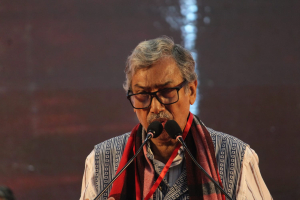
The Centre of Indian Trade Unions (CITU) expresses its profound and heart-wrenching grief at the passing of Comrade Debanjan Chakrabarti, All India Working Committee Member of CITU, a legendary leader of the Indian construction workers’ movement and a relentless warrior for Marxist ideology, who breathed his last today, March 21, 2026, at his residence in Uttarpara, West Bengal. He was an uncompromising soldier of the Indian working class movement who spent his entire life for his class – a great fighter and an ever-smiling personality. With the passing of Comrade Chakrabarti, CITU has lost a frontline leader whose exceptional class commitment profoundly shaped both the construction workers' movement and the broader working class struggle.
Born on August 15, 1952, in Bhadrakali, Hooghly, Comrade Chakrabarti’s revolutionary consciousness was forged through personal tragedy and an unwavering political spirit. His father, the martyr Professor Comrade Satyendra Chandra Chakrabarti, a teacher at Belur Ramakrishna Mission Shilpamandir, was brutally assassinated in his classroom at the age of 47 by Congress-Naxal elements on January 12, 1971, during the era of semi-fascist terror in West Bengal. Educated at Belur High School (Higher Secondary, 1968), Raja Peary Mohan College (B.Sc., 1971), and Calcutta University (B.Com., 1978; B.A., 1981; and a Diploma in German Language, 1974), Comrade Debanjan also earned a Diploma in Trade Union Studies from the WFTU Head Office in Prague, Czechoslovakia, in 1987. He began his professional career at Rolls Print Packaging Peoples in 1972 before joining Hindustan Steelworks Construction Ltd. (HSCL) in 1974, where he worked until his untimely retirement on July 31, 2001. Having joined the Communist Party of India (Marxist) on October 19, 1979, he rose to become a member of the Kolkata District Committee in 1997 and has been serving as a District Secretariat member since 2015.
His contribution to the working class movement was monumental and transformative; he served as an All India Office Bearer of CWFI and an All India Working Committee Member of CITU until his death, and was the President of the CITU Kolkata District Committee, having previously served as its General Secretary. As the Founder General Secretary of the Construction Workers Federation of India (CWFI), a position he held for 29 years from 1989 to 2018, he played a historic role in building it into a true all-India federation and making it the largest contingent within CITU. He was a pioneer in shaping the historic Building and Other Construction Workers (BOCW) Act, 1996, and remained a tireless advocate for its rigorous implementation to ensure dignity for unorganised workers. He was a founding leader and an All India Working Committee Member of the Petroleum and Gas Workers Federation of India (PGWFI) since its inception. He was instrumental in forming National Coordination Committee of private security guards & allied workers union, and he was one of the Co Conveners.
In the international working class movement, he reached the pinnacle of leadership as the General Secretary of the World Federation of Building and Wood Workers (UITBB), having been elected to its Executive Committee in Cyprus (2002), the Secretariat in Brazil (2010), and finally as General Secretary in 2011. He represented the working class in over 24 countries, including Cuba, Australia, South Africa, and Vietnam, and at the 100th Session of the ILO in Geneva. An intellectual revolutionary, he authored numerous essential texts, including Construction Industry in India at Cross Road (1992) and Globalization and Migrant Labour (2008), while remaining a life member of the Indian Society of Labour Economics.
Comrade Debanjan Chakrabarti was a rare comrade whose life was a testament to the highest proletarian virtues. He was a man of absolute, uncompromising honesty and led a life of profound simplicity that remained untouched by the high offices he held. He fought all battles bravely and faced all ups and downs with a big heart. His extraordinary conduct with ordinary workers was his greatest hallmark. He is survived by his wife, SwapnaChakrabarti; his sons, Asstt. Professor Dr. SaptarshiChakrabarti and Asstt. Professor Dr. SamarshiChakrabarti; his daughters-in-law, Deblina and Surasree; and his two grandsons. His family is fully associated with the left and progressive movement.
CITU lowers its red banners in solemn tribute to his memory, whose remarkable contributions fundamentally strengthened the backbone of the Indian working class. His untimely and sudden passing is a profound loss to the movement; yet his life of unwavering sacrifice and solidarity serves as a powerful lesson for future generations. Comrade DebanjanChakrabarti’s legacy remains an undying source of inspiration for the struggle against exploitation.
Comrade Debanjan Chakrabarti Red Salute!
Comrade Debanjan Chakrabarti Amar Rahe!
Yours Sincerely,
Elamaram Kareem
General Secretary.
Supreme Court Observations on Menstrual Leave Reflect a Deeply Flawed Approach to Women Workers’ Rights
The Centre of Indian Trade Unions (CITU) expresses its serious concern and strong disagreement with the recent observations of the Supreme Court of India, while disposing of a petition seeking a nationwide policy on menstrual leave. The Supreme Court bench comprising Chief Justice of India Surya Kant and Justice Joymalya Bagchi observed that mandating menstrual leave may harm women’s career prospects as employers may become reluctant to hire women. While directing the Union Government to examine the possibility of framing a policy after consultations with stakeholders, the Court refused to mandate menstrual leave, citing apprehensions that it may adversely affect women’s employment opportunities. This is a fallacious and misleading textbook response of neoliberal advocates who portray all labour rights as obstacles to the so-called “ease of doing business.” It is the same anti- worker, anti-women approach that informed the Supreme Court’s recent response to making minimum wages applicable to domestic workers.
The introduction of a menstrual leave policy will have a significant implication for all working women in every sector, especially in a country like India, where menstrual health is often stigmatized and not given priority. Implementing this policy is crucial for effectively addressing many public health concerns. Around 26% of the population in our country (36 crore women) menstruate. Menstruation is a natural biological process and many studies suggest that 50-90% of females experience painful menstrual cramps, and chronic conditions like endometriosis, adenomyosis, and polycystic ovary syndrome are associated with severe pain, heavy bleeding, fatigue, and other symptoms. Denying the need for institutional support in workplaces only invisibilises women’s health concerns.
It may be pointed out that Karnataka has already mandated 1 day off per month for menstrual leave without medical certification for employees in the formal sector and government employees in some states like Bihar and Odisha also get menstrual leave. Kerala has menstrual leave for students. Several countries like Japan, Indonesia, Zambia, Italy, Spain, Ireland and some provinces in China and South Korea have already implemented such policies with positive results. Thus, it is all the more important to have a national menstrual leave policy to help our working womenfolk to rest properly and seek necessary medical help for menstrual health issues without fear of workplace repercussions.
CITU believes that such reasoning by the Apex court reflects a deeply flawed and pro-employer approach which shifts the burden of discrimination onto women workers instead of confronting the structural discrimination that exists in the labour market. The argument that women’s rights at the workplace should be curtailed because employers may discriminate against them is unacceptable. By that logic, many progressive labour protections for women - including maternity benefits, workplace safety norms, and equal opportunity measures - would never have been enacted.
It is a fact that the women employees are discriminated in recruitment, promotion etc., for availing maternity leave etc. Instead of diluting or opposing protective measures, the State and judiciary must ensure strict enforcement of anti-discrimination norms and create conditions where employers cannot penalise women for biological and health-related needs.
The observations are particularly surprising given that the Supreme Court of India itself recently recognised menstrual health and hygiene as part of the “Right to Life and dignity under Article 21 of the Constitution”, affirming the State’s obligation to ensure conditions that protect women’s health and dignity. If menstrual health is a fundamental right, workplace policies must necessarily reflect that constitutional commitment. CITU reiterates the longstanding demand of the All India Coordination Committee of Working Women (CITU) that the Government must frame a comprehensive national policy and on menstrual health and workplace rights. CITU also demands to enact the Right of Women (both for working women and female students) to Menstrual Leave and Free Access to Menstrual Products Act.
Menstrual leave is not a concession but a necessary measure for substantive equality and humane working conditions. Women workers do not need paternalistic arguments about how their rights may harm their careers. What they need are stronger labour protections, enforcement of equality, and recognition of their health and dignity at work.
CITU and the All India Coordination Committee of Working Women (CITU) will continue to mobilise and struggle for comprehensive labour rights and gender-just workplace policies across the country.
CITU calls upon all working people in general and all its affiliate in particular to intensify our fight for gender-specific issues demanding government to frame national policy on menstrual leave along with general demands of workers so as to mount our united class resistance holistically against the retrograde policies of the ruling class.
Issued by
Elamaram Kareem
General Secretary
Myopic Subservience of the Modi Government to US Interests Pushes the Country Towards an unwanted Crisis!
CITU Calls for Workplace-Level Demonstrations Demanding Immediate Concrete Measures to Restore Normalcy!
India is currently facing a severe LPG–LNG supply and price crisis, pushing households into panic and disrupting industrial production across several sectors. In recent months, LPG cylinder prices have repeatedly risen, crossing ₹1,000-1,100 per domestic cylinder in many cities, while commercial cylinders have seen sharp fluctuations, increasing costs for small businesses, eateries and transport sectors. Shortage of LPG in distribution chains has led to long waiting periods for refill cylinders and a resurgence of black-marketing, particularly in urban and semi-urban areas. Instead of ensuring stable procurement, storage, and price regulation, the Modi Government’s policy of deregulation, excessive dependence on volatile international LNG markets, and neglect of public sector energy security mechanisms has deepened the crisis, pushing both households and productive sectors into severe distress.
The shameful surrender of national interests and the blatant subservience to the strategic dictum of US imperialism by the Modi Government have added to this crisis further. This surrender has effectively thrust India into an uncomfortable relationship with its long-standing ally, Iran, and has made it vulnerable to disruptions in the Strait of Hormuz - one of the world’s most crucial energy transit routes - due to the ongoing war in West Asia. India imports more than 60% of its LPG requirements, and about 85–90% of these imports pass through the Strait of Hormuz.
The Central Government has issued the Natural Gas (Supply Regulation) Order, 2026, through which “supplies have been prioritised for domestic PNG, CNG used in transport, and LPG production, with these segments receiving close to 100% of their recent consumption (average for the last six months), while industrial and commercial users may be limited to roughly 80% of their recent consumption.”
However, the situation on the ground shows that this order and its implementation are failing to arrest the impact of the supply chain disruptions. There are reports of panic in almost every part of the country due to LPG cylinder shortages.
Many industries, such as the ceramics industry, have been forced to halt production due to these disruptions. Similarly, fertiliser companies are particularly vulnerable because urea production relies heavily on imported LNG. Disruptions in fertiliser supply can wreak havoc on the upcoming kharif crop season by increasing input shortages and costs. Restaurants and hotels are also suffering heavily due to LPG shortages, with establishments in cities such as Mumbai, Kolkata and Bengaluru already warning of possible closures.
The overall impact of these disruptions can extend across sectors and spheres, including unorganised sector workers (such as street vendors and many workers who rely on loose LPG refilling, or road transport workers who depend on CNG) and food delivery workers. This may ultimately assume cascading proportions, putting millions of livelihoods under threat.
The situation demands the utmost seriousness and concrete measures from the Central Government to resolve the issue. Instead, the government is misleading the country with claims that the situation is under control.
In such a situation, the Centre of Indian Trade Unions (CITU) calls upon the Indian working class to organize strong workplace-level demonstrations demanding the following:
- Ensure uninterrupted supply of LPG, LNG, and other oil and natural gas products.
- Control and manage supply chain disruptions on a war footing and intervene effectively to prevent any attempts at hoarding and black-marketing.
- Organise stakeholder meetings, including representatives from the various sectors affected by the disruption.
- Take immediate steps to halt the cascading impact on unorganised sector workers, including street vendors and road transport workers.
- Ensure wages and allowances for workers who are laid off during this period due to supply chain disruptions.
The Central Government must issue daily status papers on the availability of various segments of oil and natural gas so as to arrest public panic.
CITU units and affiliated unions will hold strong demonstrations at all workplaces and in localities along with other sections of the population affected by the disruption. The Government of India must respond to the situation effectively.
CITU units are also directed to initiate and organise stakeholder meetings and send joint memorandums with the above-mentioned demands to the Central Government, demanding immediate intervention.
Issued By
Elamaram Kareem
General Secretary