Super User
Homage to the Dr. K N Panikkar
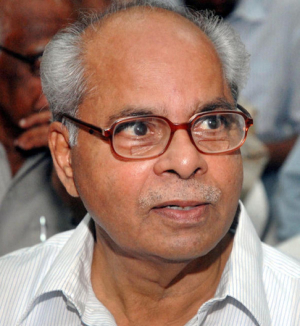
The Centre of Indian Trade Unions (CITU) expresses its profound grief and heartfelt condolences on the passing of Dr. K.N. Panikkar, the eminent Marxist historian, fearless public intellectual, and a steadfast ally of the working-class movement. Dr. Panikkar passed away on 9th March, 2026 at the age of 90 in Thiruvananthapuram, Kerala, leaving behind a monumental legacy of academic erudition and secular activism. In his passing, the nation has lost one of its most rigorous scholars and a towering figure who dedicated his life to defending the democratic secular fabric of India.
Dr. Panikkar was never a mere academic of remarkable intellectual brilliance he was a cultural warrior who understood that history is a vital site of struggle. Throughout his illustrious career, most notably during his decades at JNU from 1972, he mentored generations of students to view history through the lens of objective, scientific inquiry rather than myth-making. His seminal works, including Against Lord and State: Religion and Peasant Uprising in Malabar, Culture and Consciousness in Modern India, and Before the Night Falls: Forebodings of Fascism in India, remain essential reading for anyone seeking to understand the intersection of colonialism, class struggle, and communalism.
CITU particularly remembers Dr. Panikkar for his courageous interventions during the height of the Ram Janmabhoomi movement and the demolition of the Babri Masjid in 1992. When historical narratives were being weaponized to incite communal division, Dr. Panikkar and his colleagues stood at the forefront, using evidence-based research to challenge the distortions of Hindutva politics. Through widely circulated pamphlets, he and fellow historians exposed the lack of archaeological evidence for the claims used to mobilize communal sentiment, warning the nation against the political misuse of heritage. He remained a consistent voice against the saffronization of education, serving with distinction as the Vice-Chairman of the Kerala State Higher Education Council, Vice-Chancellor of Sree Sankaracharya Sanskrit University, and President of the Indian History Congress.
Dr. Panikkar was deeply involved in the people’s science movement and cultural activism. Born into the Kandiyur family of Guruvayur, he rose to become a global academic figure, invited as a visiting professor to numerous universities abroad. Yet, he remained rooted in the struggle for social emancipation, believing that knowledge should serve the people. His commitment to the secular-democratic values of the Indian Constitution earned him the respect of the working class and the ire of communal forces, threats he faced with unwavering Marxist conviction.
CITU conveys its deepest sympathies to his family, his students, and the academic community. At this crucial juncture in India, as neo-fascist forces attempt to rewrite history and reshape the nation in an extreme right-wing communal direction, Dr. Panikkar’s enormous contributions and intellectual legacy serve as a vital source of strength. His lifelong commitment to historical truth and secular values will continue to inspire the present and future generations to resolutely combat and defeat these neo-fascistic forces.
Issued By
Sudip Dutta
President
Withdraw the LPG Price Hike: Stop Looting the People in the Name of Global Crisis
The Centre of Indian Trade Unions (CITU) strongly condemns the steep hike in the prices of domestic as well as commercial LPG cylinders and demands its immediate withdrawal. This price hike exposes the anti-people character of the government, which seeks to burden the people under the pretext of global tensions and war. The relentless increase in the price of one of the most essential household commodities - cooking gas - directly raises the daily household expenditure of millions of families, thereby eroding their consumption capacity and even affecting the food intake of a vast section of the Indian population.
Despite its tall claims of empowering women, the government has delivered the “gift” of yet another price hike in cooking gas to women - who still bear the primary responsibility of running households - on the very occasion of International Working Women’s Day, 8 March 2026. At a time when crores of working people are struggling with rising prices, joblessness, and declining real wages, the government has chosen to further increase the burden on household cooking fuel.
A hike of Rs. 60 in domestic LPG cylinders means that the price of a cylinder has now reached around Rs. 913 in Delhi. When the BJP came to power in 2014, the price of a domestic cylinder was around Rs. 410. Thus, over the last decade, the price of cooking gas has more than doubled, imposing a severe burden on working families.
In 2014–15, the Union government spent about ₹40,569 crore on LPG subsidy when India had around 18.19 crore LPG consumers (about 14.85 crore active consumers). In 2025–26, the number of LPG connections has increased to over 32–33 crore households, largely due to the expansion of the Pradhan Mantri Ujjwala Yojana. However, the LPG subsidy allocation has fallen sharply to about ₹15,121 crore, showing that while the number of consumers has nearly doubled, government subsidy support has been drastically reduced and restricted mainly to Ujjwala beneficiaries. Even the poor households covered under the scheme have not been spared in this round of price hikes, exposing the hollowness of the government’s claims of concern for poor women.
The prices of commercial LPG cylinders have also been increased by more than Rs. 114.50. This increase will inevitably be passed on to consumers through higher prices of cooked food, restaurant services, and other essential services, further aggravating inflation for common people.
The Narendra Modi government is attempting to justify this hike by blaming the situation in West Asia. This argument is completely dishonest. When international crude oil prices collapsed during the pandemic and even briefly turned negative in April 2020, the government did not reduce LPG prices proportionately. Instead, it maintained high retail prices and used the opportunity to increase taxes and withdraw subsidies. This clearly exposes that LPG pricing under the present regime is driven not by the interests of consumers but by the objective of extracting revenue from the people.
India today consumes more than 33 million tonnes of LPG annually and imports nearly two-thirds of its requirement, making the country highly vulnerable to global market fluctuations. Instead of strengthening domestic energy security and protecting consumers through subsidies and public regulation, the government is trying to impose market-linked pricing that directly transfers global volatility to the kitchens of ordinary people.
The timing of this hike is also politically significant. With several state assembly elections approaching in the coming months, the government appears to be following its familiar tactic - imposing steep price hikes now and resorting to temporary and cosmetic reductions during election campaigns in order to mislead the electorate. The working people of the country must not be deceived by such opportunistic manoeuvres.
CITU demands the immediate withdrawal of the LPG price hike and the restoration of adequate subsidies on domestic cooking gas. CITU calls upon the working people of the country to come out in protest against this cruel imposition of the burden of economic crisis and war-driven global energy instability on the common people of our country.
Issued By
Sudip Dutta
President
Down With the Dastardly US-Israeli Imperialist Attack on Iran! CITU Stands in Complete Solidarity with All Struggles in Defence of Sovereignty! Govt. of India Should Take Swift Action to Protect Indians Stuck in GCC Countries!
The Centre of Indian Trade Unions (CITU) strongly condemns the latest round of military aggression unleashed by the United States and Israel against Iran. This attack constitutes a grave violation of the UN Charter, particularly Article 2(4), which prohibits the threat or use of force against the territorial integrity or political independence of any state. Such unilateral actions undermine the entire framework of international law and collective security.
Iran is a sovereign country of nearly 90 million people and the second-largest economy in West Asia after Saudi Arabia. It possesses approximately 9-10% of the world’s proven oil reserves and around 17% of global natural gas reserves, making it one of the most strategically important energy-producing nations in the world. West Asia as a whole accounts for nearly one-third of global oil production and controls critical maritime routes such as the Strait of Hormuz, through which about 20% of global petroleum liquids consumption passes daily. Any destabilisation of Iran directly threatens global energy security.
For over four decades, Iran has faced continuous sanctions, financial blockades, and covert destabilisation efforts. Since the withdrawal of the US from the 2015 nuclear agreement (JCPOA) in 2018, economic sanctions have intensified, cutting Iran off from global banking systems and drastically reducing its oil exports. These sanctions have severely impacted ordinary working people - leading to inflation, currency devaluation, rising unemployment, and shortages of essential goods - while failing to achieve any constructive diplomatic outcome.
Military escalation in the region must also be viewed in the broader context of the deepening crisis of global capitalism. The world economy continues to face slowing growth, volatile financial markets, supply chain fragmentation, and intensifying trade conflicts. Global military expenditure has crossed 2.4 trillion US dollars annually, the highest in history, with the United States alone accounting for nearly 40% of global defence spending. In such a scenario, war and militarisation become instruments for stimulating the military-industrial complex and reasserting geopolitical dominance and control over natural resources in favour of the crisis-hit US economy.
The cowardly targeting of civilian infrastructure, educational institutions, and urban areas violates international humanitarian law, including the Geneva Conventions. The targeted bombing of a girls’ school in Minab, South Iran, killing more than 165 children, shows the extension of brutality and barbarity of the US - Israeli regime. The retaliatory actions targeting US military bases are also causing destruction in the region, including civilian deaths. The Indian diaspora in the region is under fear and pressure. Escalation is drawing in multiple regional actors, transforming the conflict into a wider war across West Asia.
Such a development would have devastating consequences: surging oil prices, inflationary shocks across developing economies, food supply disruptions, increased refugee flows, and further militarisation of global politics. For countries like India, which import over 80% of their crude oil requirements, instability in West Asia directly translates into higher fuel prices, rising transport costs, and an increased burden on working people.
The rhetoric of defending democracy or human rights cannot conceal the consistent US - driven pattern of regime-change interventions seen in Iraq, Libya, and elsewhere, where external military intervention led to prolonged instability, social collapse, and economic devastation. It should be unambiguously stated that the right to determine the political, economic, and social system of Iran belongs exclusively to its people - not to the US or Israel, pursuing imperialist strategic and corporate interests.
Prime Minister Narendra Modi’s visible political embrace of Israel, particularly in defence and security cooperation, marks a decisive departure from India’s traditional policy and close relationships with Palestine and Iran. At a time when tensions with Iran have escalated, the government’s muted stance and apparent distancing from longstanding strategic and connectivity engagements with Tehran suggest a geopolitical realignment driven more by ideological affinity towards Zionist Israel and subjugation to US political pressure than by independent national interest. This shift risks undermining India’s credibility as a balanced regional actor while placing both its diaspora and energy security in a vulnerable position.
In the current West Asian crisis, the Modi government’s foreign policy choices have exposed millions of Indians in the Gulf Cooperation Council countries - United Arab Emirates, Saudi Arabia, Qatar, Kuwait, Oman, and Bahrain - to heightened insecurity and uncertainty.
Instead of maintaining India’s historically balanced West Asia approach, the government’s overt strategic posturing has aggravated the concerns of the migrated 9 million Indian workers as well, amid rising regional instability threatening their lives, livelihoods, safety, and remittance flows.
CITU expresses its unwavering solidarity with the people of Iran and all working people across West Asia who are bearing the brunt of imperialist aggression and the collateral impact of retaliatory moves by Iran. As part of the international class-oriented trade union movement, we reaffirm that the struggle against war is inseparable from the struggle against exploitation and imperialism. Working people across the world must unite against militarism, economic coercion, and attempts to redraw geopolitical maps through force.
CITU urges the Central Government to take immediate and necessary steps to ensure the protection of Indians stuck in GCC countries. CITU calls upon the workers and people of India to take to the streets against the dastardly attack on Iran by the US and Israel, against the escalating war situation in West Asia, and to condemn the failed role of the Modi government in this fiasco, as well as its notorious strategic shift towards the Zionist and imperialist order.
Issued by
Elamaram Kareem
General Secretary
CITU Denounces NMP 2.0 as a Draconian Blueprint for National Plunder; Calls for Massive Resistance Against RS. 16.72 Lakh Crore Public Asset Stripping!
The Centre of Indian Trade Unions (CITU) expresses its vehement condemnation and total rejection of the National Monetization Pipeline (NMP) 2.0 (FY 2026–2030) launched by the Union Finance Minister on 23rd February, 2026. This second phase, developed by NITI Aayog following the of the Union Budget 2025-26, is a draconian crony blueprint for the systematic looting by dismantling of India’s public and government sector and the wholesale transfer of national assets to monopoly private corporations, both domestic and foreign. By setting a staggering target of RS. 16.72 Lakh Crore, a figure 67% higher than the initial estimate of RS. 10 Lakh Crore and over 2.6 times the scale of NMP 1.0, the Modi government has signaled an unprecedented acceleration in asset stripping. CITU denounces the Finance Minister’s celebratory claims regarding NMP 1.0’s success in achieving 89% of its target; what the government calls success, the working class recognizes as the daylight robbery of public assets, across mining, highways, coal, and ports, at a paltry amount.
The preliminary study of NMP 2.0 reveals a predatory rentier Capitalist agenda masquerading as capital recycling. This pipeline formalizes a private rent-Seeking Model of governance, where the state abdicates its role as a provider of public goods to become a facilitator for coupon-clipping private interests.
In this present era Capitalism, private corporate giants no longer are obliged to invest in infrastructure; instead, they are invited to collect rents from the pre-existing brownfield public assets. In truth, the government is handing over Brownfield infrastructure, built over decades with public money and already de-risked to private corporations. These entities are being gifted guaranteed cash flows from 12 strategic and essential service sectors, allowing them to extract toll, user fees, and tariffs from a captive population. This is a deliberate strategy to handicap the country’s future earnings to fix current fiscal deficits caused by reckless corporate tax cuts.
The Highways, Multi-modal Logistics Parks (MMLPs), and Ropeways sectors face a massive sell out, essentially privatizing the right of movement and turning every road into a rent-collection point. The Railways and Ports, the strategic lifelines of our economy, are being hit to collect easy money. Huge Power assets are being served to private players, which will inevitably lead to skyrocketing electricity tariffs as rent-seekers prioritize profit margins over energy security. Furthermore, the Coal sector is being auctioned off, surrendering sovereign control over our energy and mineral wealth to extractors. Even Petroleum, Civil Aviation, Telecom, and Urban Real Estate have been put on the block to satisfy the unstoppable appetite of private capital.
CITU highlights that the framework of NMP 2.0 utilizing Public-Private Partnership (PPP) concessions, Infrastructure Investment Trusts (InvITs), and the securitisation of cash flows effectively alienates these assets for decades, creating a permanent transfer of revenue to private corporations.
For the Indian working class, NMP 2.0 is another economic attack to rip out the right to essential public services.
As private operators prioritize their Rate of Return over public service, the working people and the common citizen will be crushed under exorbitant user fees. CITU warns that the Viksit Bharat rhetoric is a hollow cover for a corporate-controlled economy where the public pays twice, first to build the asset through taxes, and then to a private monopoly for the right to use it. We demand the immediate scrapping of this pipeline and call upon all working people and citizens to unite in massive resistance to save our national assets from the parasitic grip of NMP 2.0.
Stop the Sale of the Nation! Save the Public Assets! Scrap NMP 2.0!
Issued by
Elamaram Kareem
General Secretary
CITU congratulates people of India for making the General Strike historic in true sense
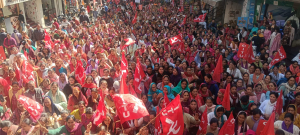
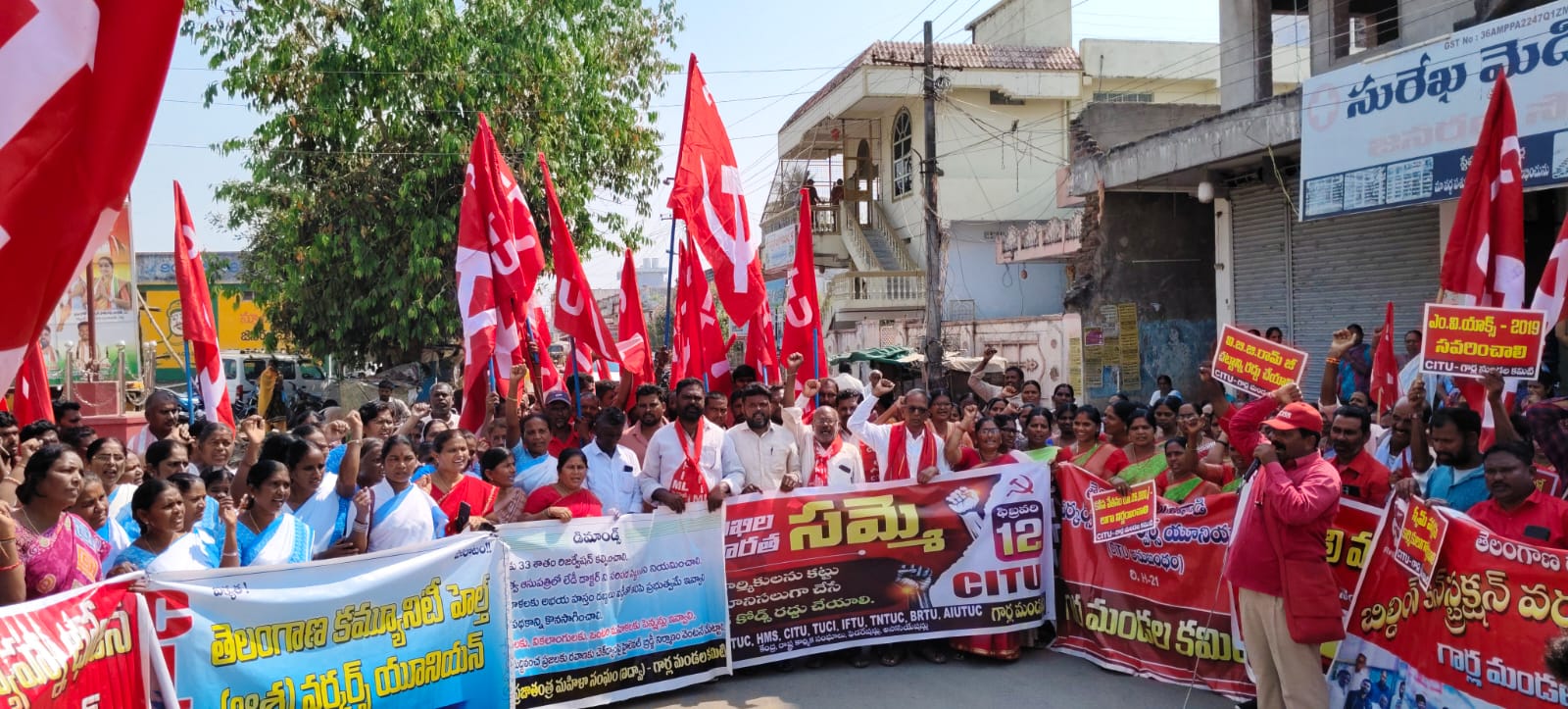
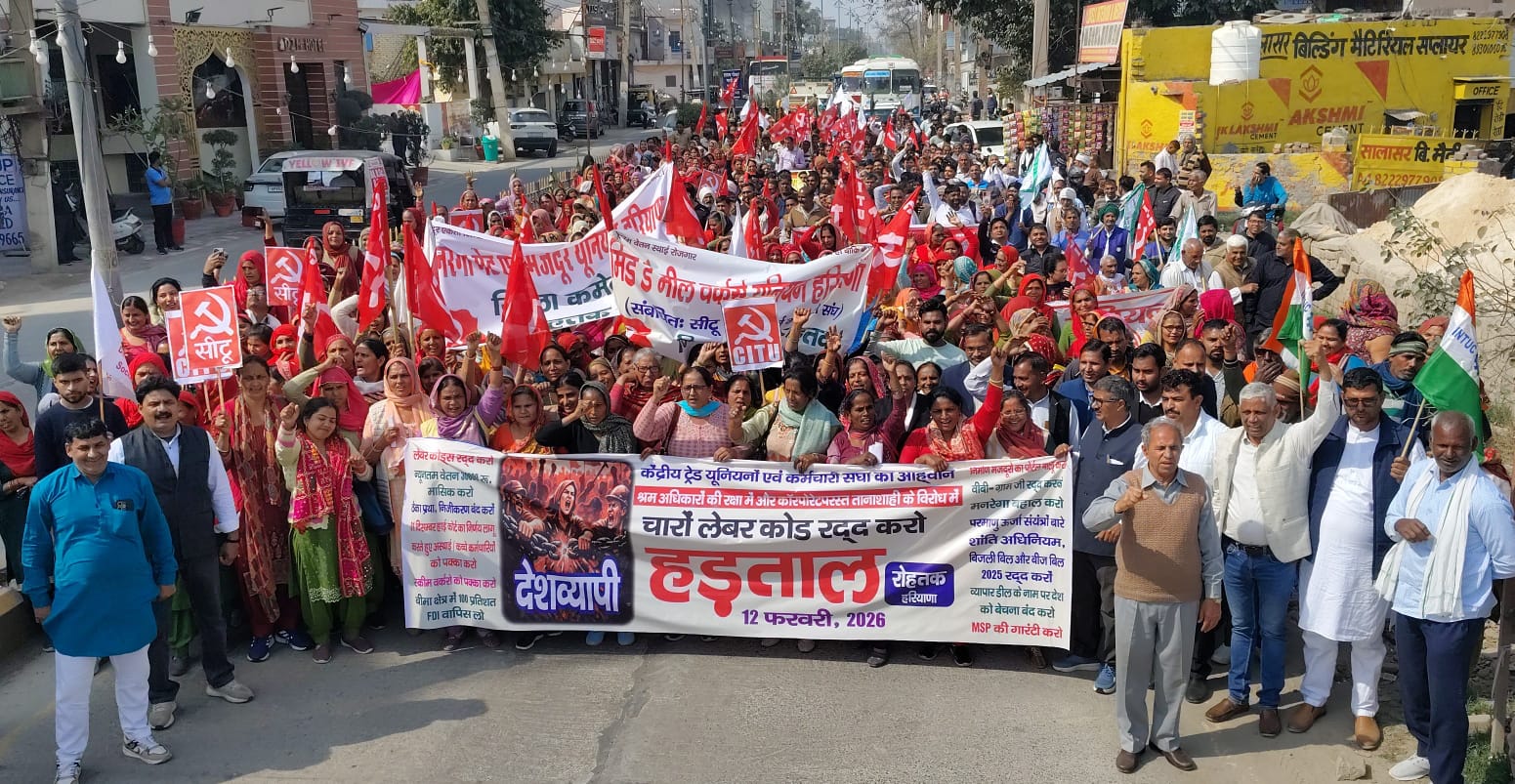
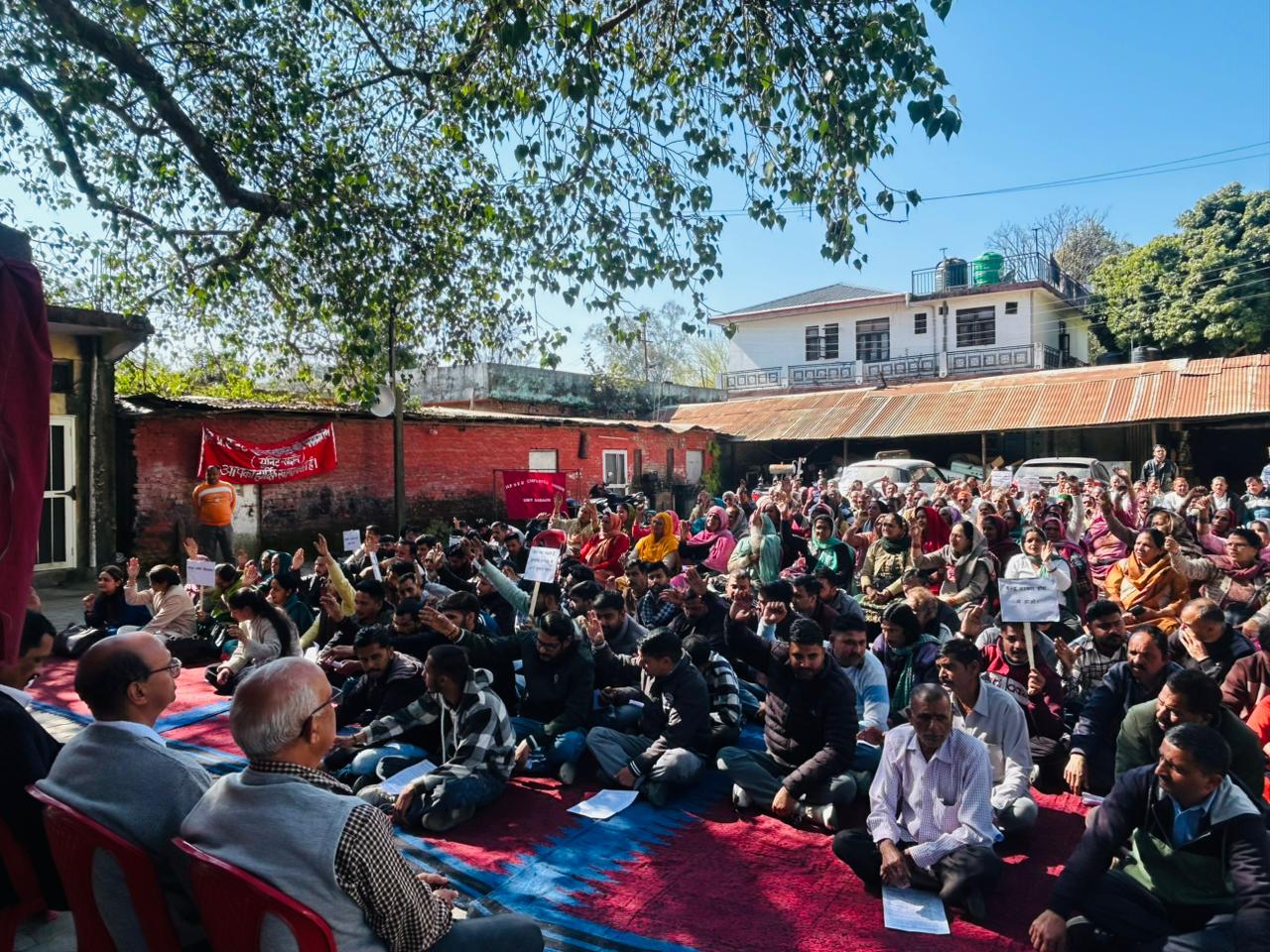
The Centre of Indian Trade Unions (CITU) congratulates the workers, farmers and agricultural workers who made the 12 February 2026 All India General Strike a historic and resounding success. Reports received up to 3:00 PM from across the country indicate that several crores of people participated in strike action, demonstrations, picketing and solidarity mobilisations. The strike witnessed massive participation from organised and unorganised sectors, public and private enterprises, multinational companies, scheme workers and rural toilers. Despite intimidation, prohibitory orders in some areas, court restrictions in certain establishments and sporadic attacks by anti-worker forces, the response was militant, disciplined and widespread.
In more than 2,000 places, thousands of workers, farmers, and agricultural and rural workers participated in massive mobilisations, marking this as one of the largest strikes in India. The mood of the people clearly expresses their determination for a do-or-die battle against the imposition of Labour Codes and other anti-worker policies. The huge mobilisation of farmers was also intensified due to the shameful India-US deal – the people of India will make imperialist forces retreat with courage and strength.
Bandh like situation prevailed in Kerala, Odisha, Tripura and some other States.
.jpeg)
.jpeg)
Coming to sector reports, in the coal and mining sector, more than 83% strike participation was recorded in Coal India Limited and its subsidiaries—CCL, ECL, NCL, SECL, MCL, WCL and NEC -along with CMPDI units. Coal production and dispatch were severely affected in Dhanbad, Bokaro and Giridih (Jharkhand); Talcher and Ib Valley (Odisha); Korba (Chhattisgarh); Singrauli (MP & UP); the Chandrapur and Nagpur belt (Maharashtra); and Raniganj–Asansol (West Bengal). In Singareni Collieries (Telangana), covering Ramagundam, Kothagudem, Manuguru, Bellampalli and Bhupalpally areas, around 90% participation was reported, halting production and coal transportation.
Rail movement of coal rakes was disrupted at multiple sidings. Iron ore mines in Koida, Barsuan, Kalta and Taladihi (Odisha), manganese mines in Balaghat (MP), and sponge iron clusters in Keonjhar and Jajpur were completely paralysed. Contract and outsourced workers participated in large numbers, strengthening the impact.
Urgent intervention sought on Karnataka Government's move to implement Labour Codes-Reg.
Elamaram Kareem, CITU General Secretary, writes to Mallikarjun Kharge, President of Indian National Congress, urging him to intervene and stop the Congress-led Karnataka Government from implementing Labour Codes. The Codes are opposed by trade unions nationwide for favouring corporate interests and undermining workers' rights. Karnataka's move contradicts opposition unity and the stand taken by Kerala. CITU appeals to Kharge to ensure Karnataka Government withdraws the draft rules immediately.
3rd February 2026
To
Shri Mallikarjun Kharge
President,
Indian National Congress,
Sub: Urgent intervention sought on Karnataka Government's move to implement Labour Codes-Reg.
Dear Kharge Ji,
I am writing to you in the context of the All India General Strike on 12th February 2026, which has been jointly called by 10 Central Trade Unions, including INTUC, against the anti-people and anti-labour policies of the Union Government. The prime demand raised by Joint T.U. Action Committee is to withdraw 4 Labour Coes. It is in this critical backdrop of united nationwide resistance that the decision of the Congress led Karnataka State Government to notify draft rules for the implementation of the Labour Codes, has caused wide spread anger, shock, and resentment among the working class and trade unions across the country.
The General strike has been necessitated by the Union Government’s relentless pursuit of policies that favour corporate interest at the cost of workers rights. The core and no negotiable demand of this historic struggle in the repeal of the four Labour Codes, which comprehensively dismantle the hard earned rights of the working class, which were won through decades of struggle. These Codes facilitate unfettered corporate exploitation by weakening collective bargaining, diluting job security, curtailing the right to strike, curbing the right to form trade unions and undermining basic protection and welfare measures for workers. The Union Government is aggressively proceeding with the notification of rules under these codes, reducing public consultation to mere formality, with no objection from trade unions being considered.
The entire opposition, including the Indian National Congress, have been consistently opposing, inside and outside Parliament, the bulldozing of anti-people legislations by the BJP led Union Government, standing firmly with the working people of the country. State like Kerala have taken principled position and are fighting in the fore front for workers’ rights. Kerala has categorically declared that it will not implement the Labour Codes in the state. The LDF Government of Kerala had convened a Labour Conclave to explore legal avenue to resist them and constituted a high level committee under the Chairmanship of Justice(Rtd) Gopal Gowda, to examine Constitutional remarks.
It is therefore, extremely disturbing and unfortunate that the Congress led Government in Karnataka has initiated steps to implement these draconian Labour Codes. At a time when even several BJP rules states have not proceeded with framing draft rules, the Karnataka Government has already notified draft rules, directly contradicting the united resistance of trade unions and the collective stand of the opposition.
This move is against the spirit of opposition unity, undermines, the nationwide united struggle of trade unions, and is viewed by working class as a serious- betrayal of workers interests across the country. In the larger interests of the working class, and to uphold the principled stand taken by the united trade union movement against Labour Codes, we urgently appeal to you to intervene and ensure that the Karnataka Government withdraws or freezes the draft rules notified under the Labour Codes immediately. You may note that this is not merely an administrative issue. Rather it is a test of political consistency, credibility, and commitment to the people of India.
An urgent corrective action at your end will go a long way in restoring confidence among the working class and reinforcing the unity of the opposition in resisting these anti-worker legislations.
We look forward to your prompt and decisive intervention.
With warm regards.
Yours sincerely,
(Elamaram Kareem)
General Secretary
CITU, AIKS AND AIAWU CALL FOR UNITED STRUGGLE AGAINST ANTI-WORKER POLICIES, ANTI-PEOPLE BUDGET AND PRO-IMPERIALIST TRADE DEALS - MARCH TOWARDS 12TH FEBRUARY 2026 GENERAL STRIKE
The Centre of Indian Trade Unions (CITU), All India Kisan Sabha (AIKS) and All India Agricultural Workers Union (AIAWU) jointly call upon the working class, peasants, and agricultural and rural workers of the country to intensify united resistance against the multi-pronged attack of the BJP-led Union Government on workers’ rights, peasants’ livelihoods, public assets and national sovereignty, and to march resolutely towards the nationwide General Strike on 12th February 2026.
The Joint Platform of Central Trade Unions (CTUs) and Sectoral Federations/Associations has resolved to call a one-day General Strike on 12th February 2026 against the imposition of the draconian Labour Codes and the broader assault on democratic rights and social entitlements. The strike call has been unconditionally supported by the Samyukt Kisan Morcha and the platform of Agricultural Workers’ Organisations.
CITU, AIKS and AIAWU express grave concern over the series of anti-people legislations and policy measures pushed by the Union Government. The Central Government has notified four Labour Codes, which will effectively snatch away the rights to association, strike and collective bargaining of the majority of Indian workers. The replacement of MGNREGA with the Viksit Bharat – Guarantee for Rozgar and Ajeevika Mission (Gramin) Act, 2025 dismantles a rights-based employment guarantee, shifts fiscal responsibility to the States, bans work during harvest seasons to ensure cheap labour, and deepens rural distress. The decision to allow 100 per cent FDI in the insurance sector, the proposed Viksit Bharat Shiksha Adhishthan Bill, the Draft Seed Bill, and the Draft Electricity (Amendment) Bill, 2025 together represent a direct attack on agriculture, education, electricity consumers and public sector institutions. The SHANTI Act opens the highly hazardous nuclear power sector to private and foreign profiteers while absolving suppliers of liability in case of accidents, posing a serious threat to nuclear safety and national sovereignty.
CITU, AIKS and AIAWU, jointly along with other national- and state-level organisations, are in continuous struggle against these policy attacks. In the midst of this, several developments have taken place that have had a further detrimental impact on the lives and livelihoods of the people. The Union Budget 2026–27, which has been presented, is anti-people and blatantly pro-corporate. While the Economic Survey itself acknowledges severe global and domestic challenges, the Budget has failed to take any concrete steps to address them and remains virtually silent on the urgent realities of unemployment, hunger and falling real incomes. It continues to shift the burden of the crisis onto workers and peasants through regressive taxation, reduced welfare spending and intensified privatisation, while extending massive concessions to corporates and foreign capital.
Welfare and subsidy allocations for agriculture, rural development, education, health, Scheduled Castes, Scheduled Tribes, women and the North-Eastern region have been cut or stagnated. Gig and unorganised workers have been ignored, while public sector enterprises are squeezed for higher dividends and pushed towards privatisation. This Budget deepens inequality, suppresses demand and worsens the crisis of livelihoods.
CITU, AIKS and AIAWU also strongly oppose the government’s pursuit of secretive and pro-imperialist trade deals, including the recent India–US, India–EU and India–UK negotiations, which threaten agriculture, industry, employment and policy autonomy. These agreements are being advanced without transparency, parliamentary scrutiny or consultation with stakeholders, and will further expose Indian workers and peasants to global corporate domination. The opening of agriculture to the United States may prove to be the deadliest attack on the peasantry of our country. The India–US Trade Deal is also an attack on national sovereignty and security.
CITU, AIKS and AIAWU call upon workers, peasants, agricultural labourers, youth, students and all democratic forces to intensify the united campaign against these anti-worker, anti-farmer and anti-people policies, and to organise gate meetings, village meetings, conventions and mass protests on 9th and 10th February.
Indian workers, farmers and agricultural workers will assemble at more than 1,000 locations in large numbers and demonstrate the largest mobilisation ever. The 12th February 2026 General Strike will be the most powerful expression of resistance to defend livelihoods, democratic rights and national sovereignty.
Issued jointly by:
Elamaram Kareem Vijoo Krishnan B Venkat
CITU AIKS AIAWU
CITU DENOUNCES THE 2024 CONSUMER PRICE INDEX CONSTRUCTED WITH VICIOUS METHODOLOGIES AND REDUCED FOOD-CLOTHING-EDUCATION WEIGHT
The Centre of Indian Trade Unions (CITU) records its vehement opposition to the proposed changes in the methodology for calculation of the Consumer Price Index (CPI), as these changes systematically convert CPI from a class-specific cost-of-living index into a macroeconomic statistical jugglery and directly undermine wage and income protection of workers, pensioners and all wage-dependent sections. CPI, particularly the CPI for Industrial Workers (CPI-IW), was evolved to measure how rising prices affect the minimum living requirements of workers. However, the present methodological direction prioritises pro-corporate monetary policy frameworks guided by the International Monetary Fund (IMF), while completely ignoring the bread-and-butter issues of workers. This represents a heinous structurally distorted alteration with far-reaching implications.
This change fundamentally alters the very purpose of CPI and renders it inappropriate for wage indexation and Dearness Allowance (DA), which are meant to protect workers against price rise, not to serve fiscal or monetary convenience. CITU’s opposition is not rooted in abstract technical disagreement, but in the concrete and adverse consequences of the revised methodology for working-class households.
The CPI is proposed to be revised by the Ministry of Statistics & Programme Implementation (MoSPI) based on the recommendations of an Expert Group headed by Ashish Kumar, which met 13 times between April 2023 and December 2025 and submitted its report on 29 January 2026, without holding any consultation with workers’ representatives or Central Trade Unions, thereby exposing its biased and exclusionary approach. CITU urges the Union Government to put on hold the implementation of the new CPI series proposed to be announced on 12th February 2026 and to convene consultations with the Central Trade Unions to evolve a consensus on the new series.
CITU opposes the revision of the consumption basket and weights based on aggregated household consumption surveys that dilute the consumption pattern of workers. Earlier CPI baskets reflected observed working-class consumption, whereas the new basket is derived from recent household consumption surveys that under-represent informal workers and reflect averaged consumption across all income classes. As per the revamped combined weights, Food & Beverages has been reduced from 45.86 to 36.75 (by 9.11), Clothing & Footwear from 6.53 to 6.38 (by 0.15), and Education Services from 4.46 to 3.33 (by 1.13). Thus, the combined weightage of these basic and indispensable items has been deliberately reduced by over 10.39 points, despite the fact that these groups constitute the most unavoidable components of consumption expenditure for the overwhelming majority of the workforce. These components have witnessed sharp price increases and absorb most of workers’ earnings. Despite this reality, the weights on these indispensable items have been slashed.
Since food and basic necessities constitute the largest share of expenditure for workers, lowering their weight mechanically suppresses headline inflation during periods when workers face the sharpest price rise. This is not a neutral statistical adjustment, but a structural attack against the working class, exposing the pro-corporate bias of the Government.
This, in turn, enables employers to save enormous amounts through minimal or reduced Dearness Allowance payments for all sections of salaried working people. The basket size has also been expanded by including an additional 59 items, raising the total number of items to 358 from 299, with the inclusion of 49 additional items in goods and 10 items in services. Even in this exercise, essential items have been grossly under-rated to accommodate items such as international airfares and other non-essentials that are irrelevant to the vast majority of workers. The motive and purpose are clearly to artificially under-rate the Consumer Price Index.
The revised methodology assumes that consumers respond to price rise by substituting expensive items with cheaper alternatives. For workers, consumption is largely inelastic in nature; any reduction in consumption reflects distress and compulsion, not choice. CITU therefore objects to the application of “quality adjustment methods” and the frequent replacement of items in the CPI basket. While such methods may be relevant for consumer durables used by higher-income groups, they are meaningless for essential goods and services.
CITU further opposes the changing pattern of price collection and the adoption of the 2018 Classification of Individual Consumption According to Purpose (COICOP). These methods increasingly rely on organised retail, standardised outlets and digital e-commerce price data. Workers and the poor largely depend on local markets, informal retail, public distribution systems and informal housing, where prices are often higher and more volatile. Excluding or under-representing these price points disconnects CPI from the lived price reality of the working class.
CITU also opposes the repeated and frequent base-year changes and the statistical linking of old and new CPI series, which break historical continuity and weaken long-term measurement of cost of living. Each base revision effectively resets accumulated inflation and erodes the basis on which DA and wages have been negotiated over decades.
The Annual Survey of Industries reveals that the share of wages in net value added has fallen sharply from 30.27 per cent in 1981–82 to 15.97 per cent in 2023–24, while employers’ profit share has risen from 23.39 per cent to 51.01 per cent during the same period. The new CPI series, by negatively altering weights, will further boost profits and intensify the squeeze on workers’ wages. At a time when the Indian economy is already facing severe demand constraints due to declining purchasing power of the masses, these changes will further aggravate the crisis. Prices rise immediately, but compensation is delayed, reduced or denied altogether; inflation is not eliminated, but is instead transferred to workers and pensioners through statistical redesign.
CITU calls upon the working people of India to intensify the campaign against the anti-worker 2024 new Consumer Price Index series as part of the ongoing mobilisation for the 12th February General Strike, and to make the strike a resounding success to halt the new series along with other demands of the General Strike.
Issued by,
(Elamaram Kareem)
General Secretary
CITU FLAYS MODI GOVT FOR SUCCUMBING TO US PRESSURE
Calls Upon the working Class to March towards the 12 February 2026 General Strike - to protect the sovereignty and the interests of the people and the Nation.
The Centre of Indian Trade Unions (CITU) flays the Modi Government for shamelessly surrendering to the US pressure under some mischievous and hidden reasons; the clandestine Bilateral Trade Agreement, as announced by the US President, if it comes into action, will be the most deadly action against the interests of crores of Indian workers, peasants, and Indian economic sovereignty at large. This surrender blatantly exposes the anti-National, anti-People character of the Modi government.
The desperation clearly vindicates CITU’s position on the US tariff as a weapon to subjugate other countries and finally to impose trade deals jeopardising the sovereignty of other nations in general and India in particular. This is a direct transfer of crisis, and the impact will be irreversible damage to the Indian economy and the livelihood of the people.
As per the claim by Mr. Trump, the Indian Government has agreed to stop buying cheaper Russian oil (40% of our total oil imports) and promised to purchase high-priced or low-quality oil from the US; along with this, the Modi Government has promised to reduce tariffs and non-tariff barriers on US goods to zero.
Further, Trump’s claim that Prime Minister Modi has committed to “buy American” at much higher levels, in addition to over USD 500 billion worth of US energy, technology, agricultural products, coal, and other goods, will severely hit Indian industries and the workers employed in them.
Certainly, the import duty exemptions on various goods proposed in the Budget are in line with that policy itself. The proposals for duty-free imports of civil aviation goods, customs exemptions on nuclear energy imports until 2037, tax holidays for foreign companies investing in data cloud centres in India until 2047, and the reduction of duty from 20 per cent to 10 per cent on imports of goods for personal use predominantly serve the interests of foreign corporates, particularly those from the USA.
The timing of the US President’s assent to the operationalisation of the Indo-US nuclear framework terms, soon after the Sustainable Harnessing and Advancement of Nuclear Energy for Transforming India (SHANTI) Bill, 2025 was passed by Parliament in December 2025 — exempting civil liability of companies supplying equipment, technology, and constructing nuclear reactors — was an earlier similar step by Trump in response to the Modi Government’s initiatives to serve the interests of US corporates.
The US Secretary of Agriculture has posted this as the victory of the “America First” agenda and expects that US agricultural products will flood India’s massive market. This will push the agrarian crisis further.
The grand silence of Mr Modi on all these aspects, while thanking for keeping the reciprocal tariff at 18 per cent, speaks volumes about the underlying surrender of the interests of the Indian people to US corporate and imperialist interests, and raises questions about the hidden reasons behind this sudden move.
CITU flays the Modi Government’s surrender to US arm-twisting tactics and demands that the Government place the ongoing Indo-US Bilateral Trade Agreement before Parliament. CITU warns that any advancement without discussion with the stakeholders — the workers, farmers, traders, and civil society organisations — will cause massive agitation across the country. CITU calls upon the Indian working class to campaign against this unacceptable surrender to US imperialism and march towards the 12th February General Strike — to protect the sovereignty and the interests of the people and the nation.
Issued by,
(Elamaram Kareem)
General Secretary
Reject and Burn the directionless and anti-people Budget, which remains criminally silent on the people’s issues.
The Union Budget 2026–27 presented by Smt. Nirmala Sitharaman appears inconsequential and directionless, even as the Economic Survey 2025–26 itself acknowledges that the Indian economy has reached a critical juncture, with the global environment undergoing geopolitical realignments that will influence investment flows, supply chains, and growth prospects for years to come. The Budget neither addresses these core challenges nor offers any meaningful policy shift to prepare India for the turbulent global situation.
As consistently warned by CITU and other Central Trade Unions, both the Economic Survey and the Budget seek to manage the crisis of the global capitalist order by shifting its burden onto the working class and the common people. The so-called reform agenda continues to centre on the notification of anti-worker Labour Codes and the dilution of quality control norms, undermining labour rights and domestic industry. The Budget speech began with rhetoric on “Yuva Shakti” but ended with a proposal for a high-powered “Education to Employment and Enterprise” Standing Committee with targets extending up to 2047. The youth of India need decent and secure employment now, not distant promises.
The Finance Minister’s record ninth consecutive Budget serves as a numerical façade concealing an economy in deep distress. In its pursuit of a 4.3 per cent fiscal deficit target and a reduction of the debt-to-GDP ratio to 55.6 per cent, the government has placed macro-fiscal optics above the pressing realities of hunger and unemployment. This is a squeeze Budget that withdraws liquidity from the hands of the poor; despite a total expenditure of ₹53.5 lakh crore, the real picture reveals a systematic erosion of social support.
There is no serious attempt to raise revenue by taxing highly profitable corporates. Instead, a 12.49 per cent rise in non-tax revenue in 2026–27 is driven mainly by a projected 16.9 per cent increase in dividends from PSUs, effectively squeezing them and pushing them into competition with private players rather than strengthening public assets. Increasing dependence on non-tax revenue will be finally instrumental for increasing burden and squeeze on people. The 49.5 per cent jump in external grants between BE 2025–26 and BE 2026–27 raises concerns over policy autonomy, fiscal sustainability, and exposure to external pressures. Increasing burden of debt servicing and interest liabilities has been forcing atrocious cut in development and welfare related budget allocations as visible in this budget also.
The Budget is a blatant gift to the billionaire class. The Minimum Alternate Tax (MAT) has been reduced from 15 per cent to 14 per cent, corporate safe-harbour provisions have been expanded, and the timeline for Advanced Pricing Agreements (APAs) has been shortened to two years, easing scrutiny of multinational corporations. Meanwhile, the common people face a ₹28.7 lakh crore net tax burden driven by regressive GST and personal income tax. For the first time, personal income tax collections (₹14.66 lakh crore) exceed corporate tax collections (₹12.31 lakh crore).
Further concessions include a five-year tax holiday for non-residents supplying capital goods to toll manufacturers in bonded zones and customs duty waivers on raw materials for aircraft parts and critical medical components for private manufacturers—socialising risks while privatising profits. The budget has furthered its decriminalization process for the tax evaders and corporates in the guise of ease of business.
The target of ₹80,000 crore worth of disinvestment and the deceptive claim of ease of living through the reduction of import duty from 20 per cent to 10 per cent on goods for personal use have been announced, while the flagship programme, PM Vishwakarma Yojana, has witnessed a reduced allocation—from ₹3,993 crore in the 2024–25 actuals to ₹3,891 crore.
The Budget serves the corporate classes by further expanding and increasing allocations for incentives. The Electronics Components Manufacturing Subsidy 2.0, with an outlay of ₹40,000 crore, the customs duty exemption on imports for nuclear power projects until 2035, and the tax holiday for foreign companies investing in data centres until 2047 clearly demonstrate the pro-corporate priorities of the government.
The allocation in Railway promotes elitification, pouring resources into seven high-speed rail corridors such as Mumbai–Pune and Hyderabad–Chennai, while ordinary passengers endure overcrowded coaches and senior citizen concessions remain unrestored. Telecom infrastructure allocations for private service providers have surged from ₹9,650 crore to ₹24,000 crore, directly subsidising private players. Despite tall claims on AI and innovation, allocations for India’s AI Mission have been slashed from ₹2,000 crore to ₹1,000 crore.
Increased capital expenditure is being financed through aggressive asset monetisation and privatisation via InvITs, REITs, NIIF, NaBFID, and proposed public-asset-specific REITs. This reflects a two-pronged strategy: extracting higher dividends from PSUs to plug fiscal gaps and handing over public assets to private corporates for profit.
While infrastructure spending has risen in defence, metro, maritime sectors, and railways, increased leasing of railway assets signals further monetisation. The proposed Rare Earth Corridors in Odisha, Kerala, Andhra Pradesh, and Tamil Nadu under a ₹7,280 crore magnet scheme threaten the displacement of tribal communities and environmental destruction. The ₹10 lakh crore asset-recycling roadmap over five years amounts to a fire sale of CPSE land and infrastructure. Health allocation stands at a meagre ₹1.01 lakh crore, only 1.96 per cent of total expenditure, while “Biopharma Shakti” of ₹10,000 crore has been created as a grant to big pharma.
Although the budget is presented as a landmark initiative for supporting MSMEs, in reality, the actual increase in budgetary allocations for MSMEs appears to be narrowly oriented towards activities which are largely situated at the lower end of production hierarchies. On the other hand, the government has allowed SEZ units to sell in the Domestic Tariff Area at concessional duties, undermining domestic firms. This reveals a consistent policy of shielding capital from risk while leaving labour unprotected.
Agriculture-related schemes such as PMKSY, RKVY, PM-Kisan, and crop insurance show no real increase after adjusting for inflation, despite the deepening agrarian crisis. Fertiliser allocations have been cut by 8.4 per cent, while food subsidy allocations remain stagnant. Claims of boosting agricultural productivity are therefore misleading. There is no increase in allocation for the basic services schemes, resulting in no scope of improvement either in the services or the wages and conditions of the scheme workers.
Welfare allocations for Scheduled Castes, Scheduled Tribes, North-Eastern regions, agriculture, rural development, education, health, and social welfare have been cut. The Gender Budget has been reduced by ₹51,144 crore. Urban development allocations have fallen by 13.16 per cent despite claims of promoting city economic regions.
Though allocations for energy and nuclear research have increased, these are clearly aimed at facilitating private entry rather than strengthening public research, with private sector entry into nuclear power at the core of this policy. Despite higher R&D spending under RDI and BIO-RIDE, allocations for public sector manufacturing, solar power, and PSU investment have declined or stagnated, even as schemes such as KUSUM and PM Surya Ghar Muft Bijli Yojana have seen manifold increases, indicating indirect subsidisation of private capital.
The stagnation of employment in the formal sectors has pushed millions into insecure gig work. Despite repeated references in the Economic Survey, the Budget provides no allocation for gig workers’ welfare and fails to honour even existing commitments, let alone provide legal recognition. Similarly, no budgetary allocation has been made for the other sections of the unorganized workers.
This is a completely anti-people and anti-working-class Budget at a time when Indian workers are struggling to survive amid economic turmoil. The Budget provides grants to private corporates while betraying the interests of the people. It is promoting de-growth in real terms and further worsen distributive equity in the already prevailing obscene inequality scenario.
CITU unequivocally rejects this anti-worker, pro-corporate Budget and calls upon the working people of India to intensify united resistance against these policies, to come onto the streets, and to march towards the 12 February General Strike.
Issued by
Elamaram Kareem
General Secretary